

Many UK consumers lose over £100 annually by not comparing banking products. Interest rates, fees, and contract terms vary dramatically between providers, yet most people stick with their current bank out of habit or misconception. Smart comparison empowers you to identify better deals, avoid hidden charges, and maximise your savings whilst securing banking services that genuinely match your needs and priorities.
Table of Contents
- Key Features To Compare: Interest Rates, Fees, And Terms
- Common Misconceptions About Banking Products And Comparison
- How Comparison Tools Enhance Decision-Making Accuracy And Confidence
- Tradeoffs: Balancing Cost Savings With Service And Features
- UK Banking Market Dynamics And Regulation Impacting Product Offers
- Practical Steps To Compare And Choose The Best Banking Product
- Discover Your Best Banking Options With Wise Choice Comparisons
- Frequently Asked Questions
Key takeaways
| Point | Details |
|---|---|
| Comparing saves money | UK consumers save over £100 yearly by switching to better banking products and avoiding unnecessary fees. |
| Features matter most | Interest rates, monthly charges, and contract terms directly impact your financial outcomes and flexibility. |
| Myths hold you back | Common misconceptions about switching and credit scores prevent beneficial changes despite clear evidence to the contrary. |
| Tools simplify decisions | Comparison platforms reduce decision time by 30% and boost confidence to switch products. |
| Balance cost and service | Evaluating both price and non-price features leads to 75% higher satisfaction with your banking choice. |
Key features to compare: interest rates, fees, and terms
Interest rates represent the foundation of any banking product’s value proposition. Savings rates vary up to 10 times between different providers, directly affecting how quickly your money grows. A current account offering 3% interest generates significantly more return than one offering 0.3%, yet many consumers remain unaware of these disparities. Your choice of provider can mean hundreds of pounds in additional earnings or losses annually.
Fees deserve equally careful scrutiny. Monthly maintenance charges, overdraft penalties, and transaction costs accumulate rapidly. Research shows 40% of customers miss hidden fees that substantially increase total banking costs. These charges often hide in fine print or apply only under specific circumstances, making them difficult to spot without systematic comparison.
Contract terms determine your practical flexibility and long-term costs. Withdrawal restrictions, minimum balance requirements, and early closure penalties all constrain how you use your money. Understanding banking terms and conditions prevents unpleasant surprises and ensures your account fits your lifestyle.
Pro tip: Create a comparison spreadsheet listing interest rates, all fees, and key terms side by side. This visual approach reveals the true cost difference between options and prevents overlooking important details buried in lengthy documentation.
Consider these critical comparison points:
- Interest calculation method: Daily versus monthly compounding affects actual returns
- Fee structures: Fixed monthly charges versus transaction-based costs suit different usage patterns
- Access conditions: Notice periods for withdrawals impact emergency fund suitability
- Bonus restrictions: Introductory rates often revert to lower standard rates after limited periods
| Feature | Impact on value | Comparison priority |
|---|---|---|
| Interest rate | Direct earnings on savings | High |
| Monthly fees | Regular ongoing cost | High |
| Overdraft charges | Penalty for going negative | Medium |
| Withdrawal terms | Flexibility and access | Medium |
| Minimum balance | Opportunity cost of locked funds | Low |
Common misconceptions about banking products and comparison
Many consumers believe all banking offers deliver similar value, reducing motivation to compare options. This misconception costs UK households substantially each year. In reality, 50% mistakenly assume bank offers are alike, yet providers compete aggressively on rates, features, and terms. The differences often exceed £200 annually for typical users.
Another widespread myth suggests switching current accounts damages your credit score. This belief stops beneficial moves despite being completely false. Opening a standard current or savings account involves a soft credit check that leaves no negative mark on your file. Only credit products like overdrafts or loans trigger hard searches affecting your score.
These misconceptions create inertia that benefits banks whilst harming consumers. Overcoming common comparison misconceptions empowers you to act confidently on better opportunities. The switching process itself has become remarkably streamlined through UK regulations requiring providers to handle transfers within seven working days.
Pro tip: Challenge any assumption making you hesitant to switch by researching the actual facts. Most barriers exist only in perception, not reality, and cost you money whilst protecting incumbent providers from competition.
Key myths to abandon:
- “Switching takes too long” – Current Account Switch Service completes transfers in seven days maximum
- “My credit will suffer” – Standard account switches do not harm credit scores
- “All banks charge similar fees” – Fees vary dramatically, from £0 to £15+ monthly
- “Loyalty gets rewarded” – Existing customers typically receive worse rates than new customers
- “Comparison is complicated” – Modern tools simplify evaluation to minutes
How comparison tools enhance decision-making accuracy and confidence
Digital comparison platforms transform banking product selection from overwhelming to manageable. These tools compile dozens of offers into standardised formats, highlighting key differences that matter most to your financial situation. Research demonstrates comparison tools reduce decision time by 30% whilst increasing bank switching rates by 20%, proving their effectiveness in overcoming decision paralysis.

Transparency represents the core value proposition. Comparison sites surface hidden fees and restrictive terms that marketing materials often obscure. This clarity prevents costly mistakes and ensures you understand exactly what you’re selecting. The side-by-side format eliminates the need to visit multiple bank websites and decipher varying presentation styles.
Confidence grows naturally when you see comprehensive data proving your choice delivers superior value. Rather than wondering whether better options exist, you gain certainty that you’ve evaluated the full market. This assurance justifies the small effort required to switch and maintains motivation throughout the process.
Banking comparison tools also track market changes, alerting you when new opportunities emerge. Regular review becomes effortless rather than requiring manual research across dozens of providers.
Benefits of systematic comparison:
- Time efficiency: Evaluate 20+ providers in minutes versus hours of individual research
- Cost visibility: See total annual costs including all fees and lost interest
- Feature filters: Narrow options based on your specific priorities like mobile banking or branch access
- Impartial rankings: Remove marketing bias and focus on objective value measures
- Update alerts: Receive notifications when better products launch or rates change
Tradeoffs: balancing cost savings with service and features
Price alone rarely determines the best banking product for your needs. Whilst lower fees and higher interest rates obviously appeal, other factors substantially affect satisfaction and practical utility. Consumers report 75% higher satisfaction when evaluating both price and non-price features rather than focusing exclusively on cost.
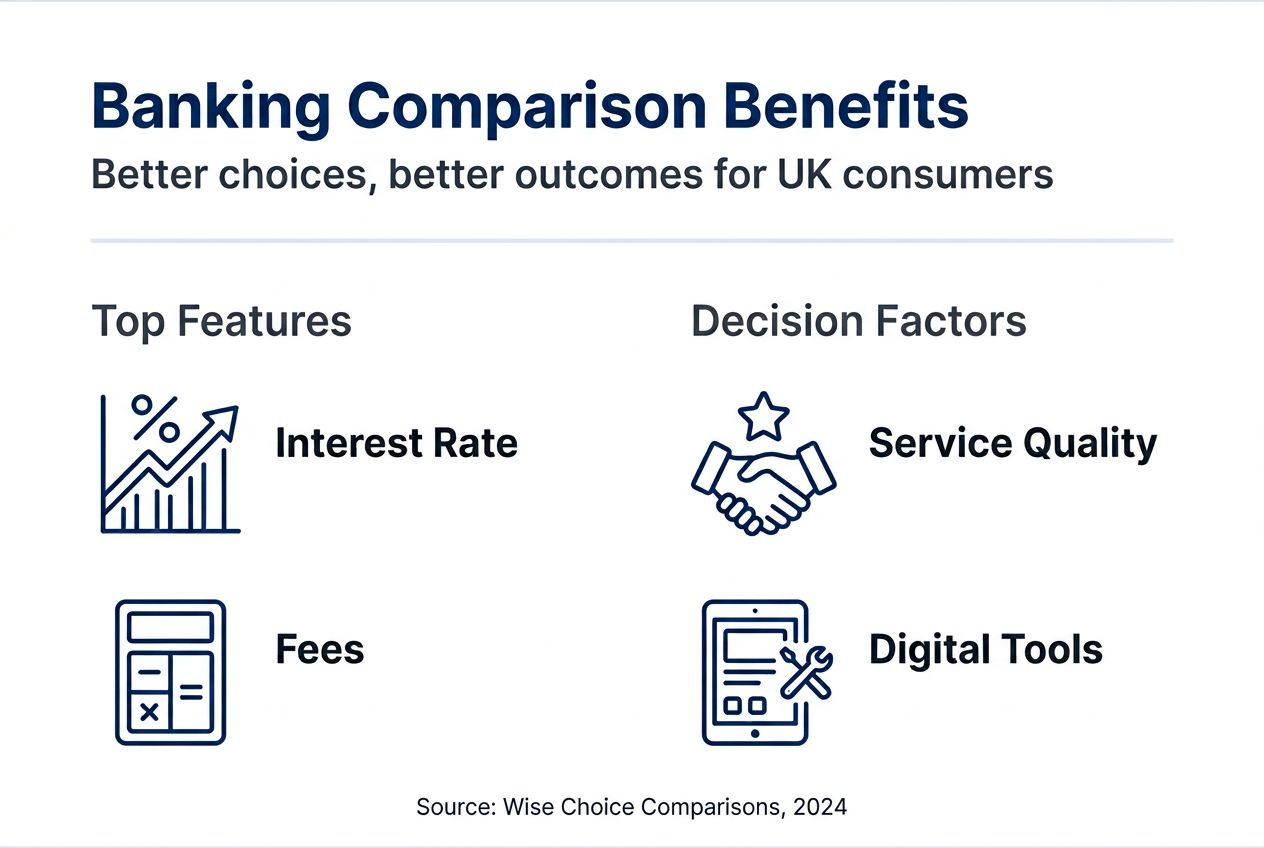
Service quality varies dramatically between providers. Some banks excel at customer support with 24/7 phone access and rapid response times, whilst others offer minimal assistance. If you frequently need help or have complex banking needs, premium service justifies modest additional costs. Conversely, confident users comfortable with digital-only banking can maximise savings through no-frills accounts.
Digital features represent another crucial consideration. Mobile app quality, online security measures, and payment technology integration affect daily convenience. A slightly lower interest rate paired with superior digital experience might deliver better overall value than the highest-rate account with clunky technology.
Pro tip: Rank your priorities before comparing to avoid being swayed by irrelevant features. If you never visit branches, don’t pay for extensive branch networks. If you value human support, don’t sacrifice it solely for minor rate improvements.
Key tradeoff considerations:
- Branch access versus digital-only: Physical locations cost more but provide face-to-face support
- Basic versus premium accounts: Additional features justify higher fees only if you’ll actually use them
- Flexibility versus rates: Accounts with restrictions typically offer better interest but less convenience
- Established versus challenger banks: Newer banks often lead on rates but lack track records
| Account type | Typical cost | Key benefits | Best for |
|---|---|---|---|
| Basic current | £0 monthly | Fee-free banking, overdraft options | Budget-conscious users |
| Premium current | £10-15 monthly | Travel insurance, breakdown cover | Frequent travellers |
| High-interest savings | £0, rate restrictions | Maximum growth on deposits | Long-term savers |
| Instant access savings | £0, lower rates | Withdrawal flexibility | Emergency funds |
Balancing price and features requires honest assessment of your actual usage patterns. Many people pay for features they never use or sacrifice valuable services to save trivial amounts. Optimal choice aligns perfectly with your genuine needs rather than theoretical benefits.
UK banking market dynamics and regulation impacting product offers
Banking product terms fluctuate constantly in response to market conditions and competitive pressures. Rates and terms can change by up to 25% annually, meaning yesterday’s best deal might become mediocre without any action on your part. This volatility demands active monitoring rather than passive acceptance of current arrangements.
Regulatory frameworks aim to protect consumers and promote transparency. The Financial Conduct Authority enforces disclosure requirements and switching protections, theoretically ensuring fair treatment. However, compliance varies and loopholes persist. Banks still find ways to obscure unfavourable terms or apply charges that technically comply with regulations whilst surprising customers.
Challenger banks have disrupted traditional dynamics by offering significantly better rates and lower fees. These digital-first providers operate with lower overhead costs, passing savings to customers through competitive pricing. Their growth pressures established banks to improve offers, benefiting all consumers who actively compare options.
Understanding UK banking regulations helps you recognise your rights and protections. The Current Account Switch Service guarantees seamless transfers, deposit protection schemes safeguard balances up to £85,000, and complaint procedures provide recourse for poor service. These protections reduce switching risk substantially.
Market factors affecting banking products:
- Base rate changes: Bank of England decisions ripple through savings and lending rates
- Competitive pressure: New market entrants force established players to improve terms
- Economic conditions: Recession or growth periods alter bank willingness to offer attractive rates
- Regulatory updates: New rules periodically reshape product structures and disclosure requirements
Practical steps to compare and choose the best banking product
Start by defining your specific financial needs and priorities. List essential features like minimum balance capacity, withdrawal frequency, and preferred access methods. This clarity prevents distraction by irrelevant offers and focuses comparison on genuinely suitable options. Consider both current needs and likely changes over the next 12-24 months.
Use trusted UK-focused comparison platforms to access comprehensive market data. These tools aggregate offers from dozens of providers, presenting standardised information that enables genuine like-for-like evaluation. Look for sites displaying all costs transparently and updating data regularly to reflect current market conditions.
Compare interest rates, fees, and contract terms systematically across shortlisted options. Calculate total annual costs including all charges and lost interest from lower rates. This holistic view reveals true value differences that headline rates alone obscure. Don’t forget to check introductory offer terms and what rates revert to after promotional periods end.
Evaluate non-price factors that affect daily satisfaction. Read recent customer reviews focusing on service quality, app functionality, and problem resolution. If possible, test mobile apps before committing to ensure they meet your expectations for usability and features.
Pro tip: Set an annual calendar reminder to review your banking arrangements. Markets change constantly, and regular comparison ensures you don’t miss better opportunities as they emerge throughout the year.
Actionable comparison steps:
- Audit current costs: Calculate exactly what you pay now including all fees and lost interest
- Define priorities: List must-have features, nice-to-have features, and irrelevant features
- Research options: Use comparison sites to identify 3-5 suitable alternatives
- Calculate true costs: Factor in all fees, interest rates, and requirement-related expenses
- Check reviews: Verify service quality through independent customer feedback
- Initiate switch: Use Current Account Switch Service or open new accounts as appropriate
- Monitor results: Confirm promised rates and terms apply, escalate any discrepancies immediately
- Review annually: Repeat comparison process yearly to maintain optimal arrangements
Smart comparison tips apply across banking and other financial products. The skills you develop comparing bank accounts transfer directly to insurance, mortgages, and investment products, multiplying your savings potential.
Discover your best banking options with Wise Choice Comparisons
Ready to put these insights into action? Wise Choice Comparisons provides curated comparison services specifically designed for UK banking products and household finances. Our platform consolidates quotes from regulated providers, presenting transparent comparisons that highlight genuine value differences.

Thousands of UK residents have already improved their financial outcomes through systematic comparison. Whether you’re seeking better savings rates, lower account fees, or banking features that genuinely match your lifestyle, our tools simplify the process. Join those saving with comparison websites and take control of your banking costs today. Visit Wise Choice Comparisons to start comparing and discover how much you could save within minutes.
Frequently asked questions
Why is it important to compare banking products regularly?
Banking offers change frequently as providers adjust rates and terms in response to market conditions. Regular comparison prevents you from missing better deals that emerge throughout the year. Many consumers lose over £100 annually simply by staying with outdated arrangements when superior options exist. Reviewing your banking products at least once yearly ensures you maintain optimal value and avoid costly hidden fees that accumulate over time.
Does switching bank accounts affect my credit score?
Switching current or savings accounts does not harm your credit score in the UK. Opening standard banking products involves only soft credit checks that leave no negative mark on your file. This common misconception prevents many beneficial switches despite being completely false. Only applying for credit products like overdrafts or loans triggers hard searches that might temporarily affect your score.
What features besides price should I consider when comparing bank products?
Service quality, digital access, customer support responsiveness, and flexibility in terms all significantly affect your daily experience. Mobile app functionality matters if you bank primarily through your phone. Branch availability becomes important if you value face-to-face assistance. Withdrawal restrictions and minimum balance requirements impact your practical flexibility. Consumers report substantially higher satisfaction when evaluating these factors alongside cost rather than focusing exclusively on rates and fees.
How can I effectively use comparison tools to choose a bank?
Use reputable UK-focused comparison platforms that display comprehensive data from regulated providers. Check multiple criteria including interest rates, monthly fees, and contract terms rather than sorting by a single factor. Calculate total annual costs factoring in all charges and lost interest from lower rates. Read recent customer reviews to verify service quality claims. Repeat the comparison process at least annually as market conditions and your personal needs evolve over time.
Recommended
- How to Save Hundreds Every Year Using Comparison Websites in the UK – Wise Choice Comparisons
- Landing – Wise Choice Comparisons
- Top 10 UK Services You Should Compare Before Renewing in 2026 – Wise Choice Comparisons
- 10 Smart Tips for Comparing Insurance Quotes in the UK – Wise Choice Comparisons
- Best Personal Loans 2023 Compare Lenders All in One Place
- Compare Accounts – Olla Trade