

Think you understand how insurance deductibles work? Most UK consumers mistakenly believe they only pay one excess when making a claim, often discovering too late that compulsory and voluntary excesses combine. This confusion costs families hundreds of pounds annually in unexpected claim costs and missed premium savings. Understanding how deductibles (or excesses, as we call them in the UK) actually work empowers you to balance protection with affordability, potentially slashing your insurance bills whilst maintaining the cover you need.
Table of Contents
- Understanding Insurance Deductibles In The UK
- Types Of Deductibles: Compulsory Vs Voluntary
- How Deductibles Impact Insurance Costs
- Common Misconceptions About Deductibles
- Balancing Deductibles With Premiums And Risk
- Save Money With Expert Insurance Comparison Services
- How Do Insurance Deductibles Work In The UK?
Key takeaways
| Point | Details |
|---|---|
| Excess terminology | UK insurers use ‘excess’ rather than ‘deductible’, comprising compulsory (set by insurer) and voluntary (your choice) components. |
| Premium impact | Higher voluntary excess reduces premiums up to 30%, but increases your out-of-pocket costs when claiming. |
| Total claim cost | You pay the sum of compulsory and voluntary excess when making a claim, not just one amount. |
| Strategic selection | Balance your financial buffer against claim likelihood to choose the optimal excess level for your situation. |
| Money-saving potential | Understanding excess structures helps you compare policies effectively and avoid overpaying for insurance. |
Understanding insurance deductibles in the UK
In the UK, we primarily use the term ‘excess’ instead of ‘deductible’, though both describe the same concept. Your excess is the amount subtracted from any insurance payout when you make a claim. If your car repair costs £2,000 and your total excess is £400, your insurer pays £1,600 whilst you cover the remaining £400.
Two types of excess exist in UK insurance policies. Compulsory excess is set by your insurer and remains mandatory regardless of your preferences. Insurers determine this amount based on risk factors like your age, vehicle type, or claims history. Voluntary excess is optional and you choose this amount when purchasing your policy to influence your premium costs.
Typical car insurance compulsory excess ranges from £150 to £300, whilst voluntary excess options span from £0 to £1,000 or more. The distinction matters because both amounts combine when you claim, directly affecting your out-of-pocket expenses.
Key differences between compulsory and voluntary excess:
- Compulsory excess is non-negotiable and set by the insurer based on risk assessment
- Voluntary excess is your choice and directly impacts premium costs
- Both excesses add together to determine your total claim payment
- Adjusting voluntary excess provides the only lever you control for balancing premiums against potential costs
Understanding these terms forms the foundation for making informed choices when comparing insurance quotes UK and selecting policies that match your financial situation.
Types of deductibles: compulsory vs voluntary
Compulsory excess represents the insurer’s assessment of baseline risk. Insurers calculate this amount using actuarial data about claim patterns, considering factors like driver age, location, vehicle value, and claims history. You cannot negotiate or remove compulsory excess as it remains embedded in the policy terms.

Voluntary excess gives you control over premium costs. By agreeing to pay more upfront during a claim, you signal lower financial risk to the insurer. This risk reduction translates directly into lower premium quotes because insurers expect fewer small claims when policyholders face higher out-of-pocket costs.
The mathematics are straightforward: Total excess payable = Compulsory excess + Voluntary excess. If your compulsory excess is £250 and you select £300 voluntary excess, you pay £550 before your insurer covers the remaining repair or replacement costs.
Consider these factors when choosing voluntary excess:
- Your emergency savings buffer determines how much excess you can realistically afford
- Claim frequency expectations based on your driving habits or property location
- Premium savings versus potential out-of-pocket costs if you need to claim
- Your risk tolerance and financial stability during unexpected events
Pro Tip: Calculate your total excess across all policies (car, home, contents) to understand your maximum potential exposure in a worst-case scenario. This helps you set voluntary excess amounts that won’t strain your finances if multiple claims arise simultaneously.
Exploring insurance comparison services helps you visualise how different voluntary excess choices affect your premiums across multiple insurers, enabling data-driven decisions rather than guesswork.
How deductibles impact insurance costs
Higher voluntary excess creates measurable premium savings. Choosing higher voluntary excess typically lowers premiums because insurers face reduced financial risk from your increased cost-sharing commitment. This relationship exists because higher excesses discourage small claims, reducing administrative costs and claim frequency for insurers.
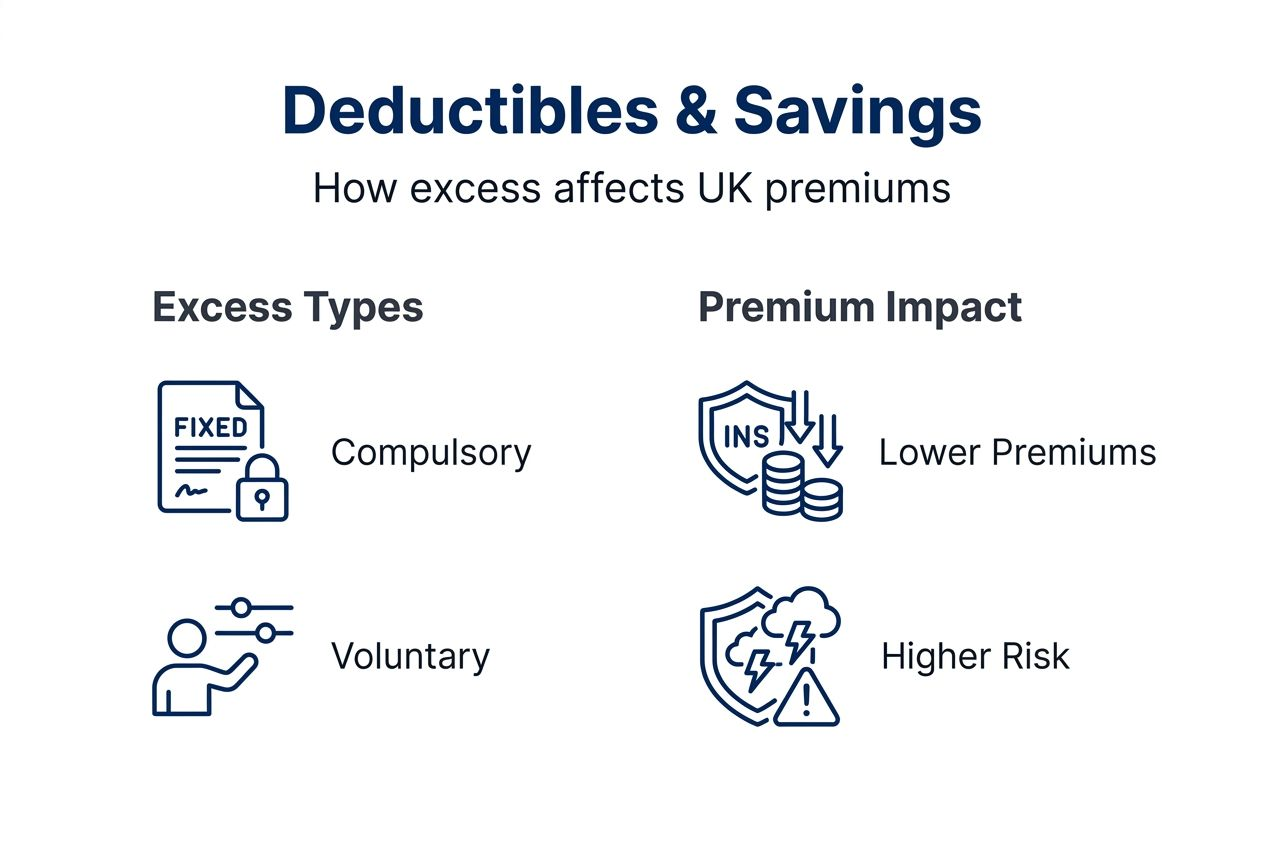
The premium reduction varies by insurer and policy type, but savings can reach 20-30% when selecting maximum voluntary excess compared to zero voluntary excess. However, these savings only benefit you if claim costs remain manageable within your budget.
| Voluntary Excess | Annual Premium | Savings vs £0 Excess | Total Cost if Claiming |
|---|---|---|---|
| £0 | £800 | £0 | £250 (compulsory only) |
| £250 | £650 | £150 | £500 |
| £500 | £560 | £240 | £750 |
| £1,000 | £500 | £300 | £1,250 |
This example demonstrates the trade-off clearly. Choosing £500 voluntary excess saves £240 annually but increases your claim cost to £750 (£250 compulsory + £500 voluntary). If you remain claim-free for three years, you save £720 in premiums. One claim costs you an extra £500 compared to zero voluntary excess, leaving you £220 ahead overall.
Insurers price premiums this way because behavioural economics shows that people with higher excesses drive more carefully and claim less frequently. The insurer passes these reduced risk costs to you through lower premiums.
Pro Tip: Calculate your break-even point by dividing additional voluntary excess by annual premium savings. If £500 excess saves £200 yearly, you break even after 2.5 claim-free years. This analysis helps you determine if higher excess suits your risk profile.
Using smart insurance comparison tips ensures you evaluate excess options across multiple insurers, finding the optimal balance between premiums and potential claim costs for your circumstances.
Common misconceptions about deductibles
Many consumers confuse compulsory and voluntary excess, believing they only pay one amount when claiming. This misunderstanding leads to shock when insurers deduct the combined total from claim payouts. Always confirm your total excess (both components) before purchasing any policy to avoid unexpected costs.
Another widespread myth suggests higher deductibles always save money. Whilst higher voluntary excess reduces premiums, frequent claimants often pay more overall because claim costs outweigh premium savings. If you typically make one claim every two years, lower excess might prove more economical despite higher premiums.
Not all claims involve excess payments. Some policies include features like windscreen cover or breakdown assistance with reduced or zero excess. Additionally, if someone else causes an accident and their insurer accepts full liability, you shouldn’t pay any excess. Your excess only applies to claims paid by your own insurer.
Common myths to avoid:
- Believing only compulsory excess applies (both types combine)
- Assuming higher excess always saves money (depends on claim frequency)
- Thinking all claims require excess payment (liability claims may not)
- Expecting to negotiate compulsory excess (only voluntary excess is adjustable)
- Presuming excess amounts remain fixed (compulsory excess can change at renewal based on risk reassessment)
“Understanding your total excess obligation before you need to claim prevents financial strain during already stressful situations like accidents or property damage.”
Exploring insurance basics and guides helps you identify these misconceptions early, ensuring you make informed decisions based on accurate information rather than assumptions. Additional resources on insurance claim myths explained provide deeper insights into common errors consumers make.
Balancing deductibles with premiums and risk
Choosing the right excess level requires evaluating your personal financial situation against statistical claim likelihood. This framework helps you make systematic decisions rather than relying on guesswork or insurer recommendations that may not suit your circumstances.
Follow these steps to select optimal excess levels:
- Identify your compulsory excess amount (non-negotiable, set by insurer)
- Review voluntary excess options and corresponding premium quotes
- Assess your emergency savings buffer to determine affordable excess levels
- Evaluate your claim frequency based on past experience and risk factors
- Calculate break-even points for different voluntary excess amounts
- Select the excess level that balances premium savings with manageable claim costs
Different situations call for different strategies. Low-risk consumers with substantial emergency funds benefit from higher voluntary excess because premium savings accumulate over claim-free years whilst claim costs remain affordable if needed. Conversely, frequent claimants or those with limited savings should choose lower voluntary excess despite higher premiums, preventing financial hardship during claims.
| Consumer Profile | Recommended Approach | Reasoning |
|---|---|---|
| Claim-free 5+ years, strong savings | High voluntary excess (£500-£1,000) | Maximise premium savings, minimal claim risk |
| Average claims, moderate savings | Medium voluntary excess (£250-£500) | Balance savings with manageable costs |
| Frequent claims or limited savings | Low/zero voluntary excess | Avoid financial strain during claims |
| Young/new drivers | Low voluntary excess initially | Compulsory excess already high, reduce total exposure |
Pro Tip: Review your excess strategy annually at renewal. As your financial situation improves or your risk profile changes, adjusting voluntary excess ensures your policy continues matching your circumstances rather than outdated decisions from years past.
Practical tips for managing deductibles effectively include setting aside premium savings in a dedicated fund to cover potential excess costs, regularly comparing policies to ensure competitive pricing, and considering no-claims bonuses that may offset higher excess through alternative savings mechanisms.
Guidance on negotiating with insurers guide provides additional strategies for optimising your insurance costs beyond excess selection alone.
Save money with expert insurance comparison services
Now that you understand how deductibles work, applying this knowledge requires comparing multiple insurers to find the best combination of premiums and excess levels for your situation. Wise Choice Comparisons simplifies this process by consolidating quotes from trusted, regulated providers in one transparent platform.

Our smart insurance quote tips help you evaluate excess options systematically, ensuring you don’t overpay for protection or underinsure due to tempting premium savings. Access our insurance comparison services to receive personalised recommendations matching your risk tolerance and budget constraints.
Visit Wise Choice Comparisons home today to start comparing policies with confidence, armed with the deductible knowledge that empowers better financial decisions and meaningful household savings on essential insurance cover.
How do insurance deductibles work in the UK?
What is the difference between compulsory and voluntary excess?
Compulsory excess is mandatory and set by your insurer based on risk factors like age and claims history. Voluntary excess is optional and you choose this amount to influence your premium costs. Both amounts combine to form your total excess payable when making a claim.
How does choosing higher voluntary excess affect my insurance premium?
Higher voluntary excess reduces your insurance premium because insurers face lower financial risk when you agree to pay more upfront during claims. Premium savings typically range from 15-30% depending on the excess amount chosen, though this varies by insurer and policy type.
Do I always pay excess when making an insurance claim?
Not always. You pay excess only when your own insurer settles the claim. If another party accepts full liability for an incident, their insurer pays your costs without deducting your excess. Some policy features like windscreen cover may also have reduced or zero excess.
How do I calculate if higher excess saves me money overall?
Divide the additional voluntary excess amount by your annual premium savings to find your break-even point in claim-free years. If £500 voluntary excess saves £200 annually, you break even after 2.5 years without claims. Consider your typical claim frequency when making this calculation.
Can I change my voluntary excess amount after purchasing a policy?
Typically not mid-term, but you can adjust voluntary excess at renewal when your policy expires. Some insurers allow mid-term adjustments through policy amendments, though this may incur administrative fees. Review your excess level annually to ensure it matches your current financial situation and risk profile.