
UK households can save up to 30% on their energy bills by using price comparison sites, yet many still overlook this powerful tool. Rising costs and an overwhelming variety of insurance, utilities, and broadband options make finding the best deal feel impossible. Price comparison platforms cut through this complexity, delivering personalised quotes in minutes and empowering you to make smarter financial decisions without the hassle.
Table of Contents
- How Price Comparison Sites Work: Mechanisms Behind The Savings
- Benefits Of Using Price Comparison Sites For UK Consumers
- Common Misconceptions About Price Comparison Sites
- Limitations And Edge Cases Of Price Comparison Sites
- How To Use Price Comparison Sites Effectively
- Market Impact And Consumer Empowerment Through Price Comparison
- Conclusion: Making Wise Financial Choices With Price Comparison Sites
- Frequently Asked Questions
Key takeaways
| Point | Details |
|---|---|
| Comparison sites simplify complex markets | UK households access multiple provider quotes in one place, reducing research time dramatically. |
| Typical savings reach 20-30% on energy | Users save £100-200 yearly on broadband and similar amounts on other household bills. |
| Not all deals appear on sites | Some providers and loyalty offers remain exclusive, so the lowest price isn’t always guaranteed. |
| Effective use requires verification | Check coverage, compare non-price factors, and confirm details directly with providers. |
| Sites promote competition and choice | Widespread use drives better tariffs, improved service quality, and greater consumer control. |
How price comparison sites work: mechanisms behind the savings
Price comparison sites aggregate multiple provider quotes and simplify complex tariffs into digestible information. These platforms collect data from dozens of providers and display it in one convenient portal. You input basic details about your household needs, and the site generates personalised quotes tailored to your usage patterns.
The magic lies in tariff simplification. Instead of wading through pages of confusing terms and conditions on individual provider websites, comparison sites distil everything into one clear page. This standardised format makes it easy to spot differences in pricing, coverage, and contract length at a glance.
Many platforms negotiate exclusive deals available only through their channels. These special offers often beat prices listed directly on provider websites. When you use trusted UK price comparison sites, you gain access to a wider range of options than you’d find through manual research.
The personalisation improves as you provide more detailed information. Accurate usage data, property details, and coverage preferences help algorithms match you with genuinely suitable deals. This reduces the risk of paying for features you don’t need or missing coverage you do.
Pro Tip: Spend an extra five minutes entering precise usage figures rather than estimates. The more accurate your input, the more relevant your quotes become, potentially revealing savings you’d otherwise miss.
Platform design deliberately reduces time and effort. Instead of visiting ten different comparison services websites and filling out ten separate forms, you complete one quick questionnaire. The technology handles the rest, comparing prices and features across the market while you get on with your day. This efficiency alone makes comparison sites invaluable for busy households, and insights from the broader insurance sector confirm their growing importance in financial planning.
Benefits of using price comparison sites for UK consumers
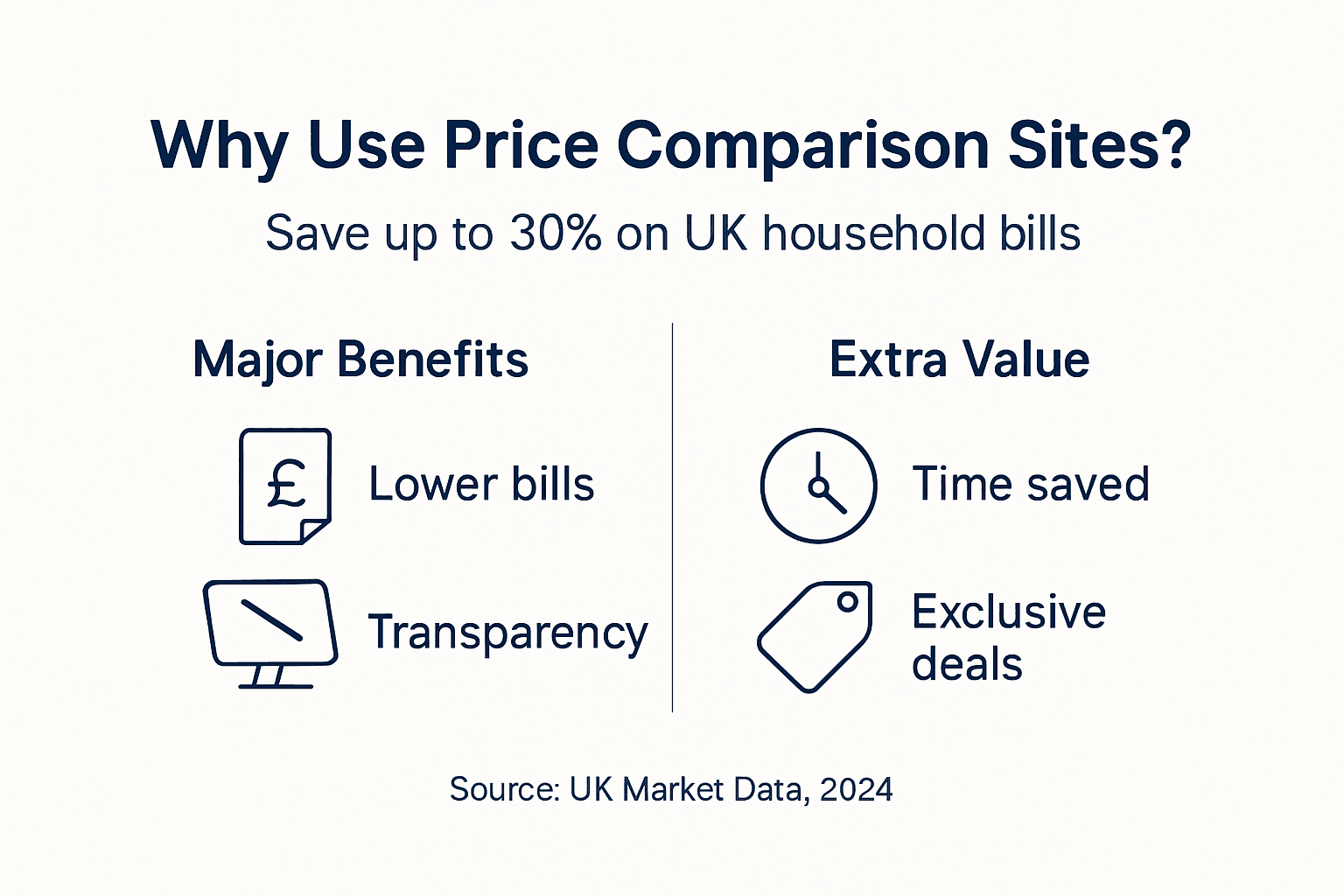
Cost savings top the list of advantages. UK consumers save on average 20-30% on energy bills and £100-200 yearly on broadband by using these platforms. These aren’t trivial amounts. For a typical household, that translates to hundreds of pounds back in your pocket annually, money you can redirect towards other priorities.
Time savings matter just as much as financial ones. Researching multiple providers individually could take hours or even days. Comparison sites condense this process into minutes. You avoid the tedium of navigating different website layouts, searching for pricing information buried in small print, and manually noting down quotes for later comparison.
Transparency builds decision confidence. When you see twenty quotes side by side with clear breakdowns of what’s included, you feel more certain about your choice. This visibility removes the nagging doubt that you might have missed a better deal elsewhere. The data presentation eliminates guesswork, replacing it with concrete numbers and straightforward comparisons.
Did you know? Decision fatigue reduces the quality of choices we make. By simplifying your options into manageable comparisons, these platforms help you make better decisions without mental exhaustion.
Comparison sites also surface deals you’d never discover on your own. Smaller providers with competitive offerings but limited marketing budgets gain visibility alongside household names. This levels the playing field and ensures you consider genuinely good value propositions that might otherwise fly under your radar.
Reduced decision fatigue represents another underrated benefit. When faced with overwhelming choice, many people stick with familiar providers or give up entirely. Comparison platforms curate options based on relevance, presenting a manageable selection instead of every possible choice. This makes the decision process feel achievable rather than overwhelming. Resources on how to save hundreds every year and guides to top UK services to compare demonstrate how strategic use maximises these benefits. Following smart insurance comparison tips further enhances your savings potential.
Common misconceptions about price comparison sites
Many people believe comparison sites show every available deal, but this isn’t true. Not all providers or deals appear on comparison sites because some companies choose not to participate. Others reserve their best offers for existing customers through loyalty schemes that bypass comparison platforms entirely.
The myth that comparison sites always guarantee the lowest price creates unrealistic expectations. While these platforms frequently surface excellent deals, the absolute cheapest option might exist elsewhere. Exclusive online-only offers, limited-time promotions, or direct negotiation with providers can sometimes beat comparison site prices.
Pro Tip: Use comparison sites as your starting point, not your ending point. Once you identify strong contenders, check those providers’ websites directly for any exclusive deals not listed on comparison platforms.
Concerns about bias towards certain providers stem from misunderstanding how these sites operate. FCA regulation requires impartiality and transparency in how comparison platforms present options. They must disclose commission arrangements and ranking methodologies. This regulatory oversight protects consumers from hidden manipulation.
The quality of comparisons depends heavily on the accuracy of information you provide. Sites base their results on the data you input. If you underestimate your energy usage or provide incorrect postcode details, the quotes won’t reflect your actual costs. Garbage in, garbage out applies here.
Here’s what comparison sites actually do:
- Display deals from participating providers willing to list on their platform
- Apply algorithms based on your input data to rank and filter options
- Disclose commercial relationships that might influence presentation
- Update pricing regularly, though not always in real time
- Provide standardised comparison formats for easier evaluation
Consumers should verify final details directly with providers before committing. The quote you see on a comparison site represents an estimate based on available information. Contract terms, coverage exclusions, and eligibility requirements need confirmation. This verification step catches potential surprises before you’re locked into an agreement. Resources on how to avoid mistakes on comparison sites and understanding how Wise Choice ensures accurate comparisons help you navigate these nuances confidently.
Limitations and edge cases of price comparison sites
Some major providers deliberately avoid comparison platforms, preferring to deal with customers directly. This means gaps exist in market coverage. You might miss competitive offers from companies that have opted out of the comparison ecosystem entirely.
Loyalty discounts often bypass comparison listings. If you’ve been with an energy provider for years, they might offer you a retention deal that beats anything on comparison sites. These exclusive arrangements reward existing customers but remain invisible to comparison algorithms.
Personalisation has limits. Some providers and loyalty deals are excluded from comparison sites; personalisation is limited without detailed user input. Sites can only work with the information you provide and the providers in their database. If you have unusual circumstances or specific requirements, the matches might not suit your exact needs.
Niche or smaller providers frequently get overlooked. Comparison databases prioritise major players with broad coverage and established track records. Specialist providers serving particular regions or customer segments may not appear, even if they offer excellent value for your specific situation.
Key limitations to remember:
- Database coverage varies between comparison sites, so check multiple platforms
- Real-time pricing updates aren’t guaranteed; deals can change between viewing and purchasing
- Complex scenarios with multiple variables may not generate accurate quotes
- Regional availability affects which deals appear in your results
- Special circumstances like poor credit or unique property types may limit options
Supplementing comparison site research with direct provider research addresses these gaps. Once you’ve identified top contenders through a comparison platform, visit those providers directly to explore additional options. Check for unadvertised deals, ask about loyalty schemes, and clarify anything unclear from the comparison listing. This two-pronged approach combines the efficiency of comparison sites with the thoroughness of individual research. Guidance on common mistakes to avoid and strategies to maximise savings with comparison sites help you work around these constraints effectively.
How to use price comparison sites effectively
Start by identifying which household services offer the biggest savings potential. Energy and broadband typically deliver substantial returns on the time invested in comparison. Insurance products follow closely behind. Focus your efforts where the financial impact matters most.

Choose trusted, impartial UK comparison platforms with solid reputations. Look for sites that clearly disclose how they make money and which providers they work with. FCA-regulated platforms offer additional consumer protection and reliability.
Input accurate usage data for genuinely personalised quotes. Check recent bills for precise consumption figures rather than guessing. For insurance, provide honest answers about circumstances that affect premiums. Verifying provider coverage, comparing beyond price, and performing regular checks improve comparison site effectiveness.
Pro Tip: Keep copies of recent bills handy when using comparison sites. Having exact usage figures, current costs, and contract end dates at your fingertips speeds up the process and improves quote accuracy.
Follow this proven approach:
- Gather current bills and contract details before starting
- Use two or three reputable comparison sites for broader coverage
- Enter identical information on each platform for consistent results
- Shortlist three to five strong contenders based on overall value
- Check shortlisted providers’ websites directly for additional deals
- Read contract terms carefully, noting cancellation policies and price guarantees
- Verify coverage and service quality through independent reviews
- Contact providers with questions before making your final decision
Evaluate offers holistically, not just on price. Contract length, exit fees, customer service ratings, and additional features all matter. A slightly pricier option with superior customer support and flexible terms might deliver better value than the absolute cheapest deal with restrictive conditions.
Regularly review deals because tariffs change frequently. Set calendar reminders for annual reviews, particularly timing them for a month before contracts end. This gives you adequate time to research alternatives without the pressure of an imminent deadline. Market conditions shift, new providers emerge, and your own circumstances evolve, all of which affect what represents the best deal. Resources including tips for comparing insurance quotes, Wise Choice comparison tips, and guidance on choosing services to compare provide actionable frameworks. Additional tools for better comparisons demonstrate broader application of comparison methodologies.
Market impact and consumer empowerment through price comparison
Widespread use of comparison sites fundamentally reshapes how providers compete. Price comparison sites increase competition, improve service quality, and enhance transparency across UK markets. When consumers can instantly compare dozens of offers, providers must work harder to stand out. This competitive pressure drives innovation in tariff structures and service delivery.
Providers improve service quality to differentiate themselves beyond price alone. As price becomes more transparent and comparable, companies invest in customer service, user experience, and value-added features. This benefits everyone, even consumers who don’t actively use comparison sites, because market-wide standards rise.
Greater transparency gives consumers unprecedented control over household spending. You’re no longer dependent on provider marketing or limited to the few companies you happen to know about. This information access shifts power from sellers to buyers, creating a more balanced marketplace.
Key market effects include:
- Reduced information asymmetry between providers and consumers
- Faster price adjustments as providers respond to competitive pressure
- Lower barriers to entry for new providers offering innovative solutions
- Increased focus on customer retention through quality rather than inertia
- More standardised product features for easier comparison
Comparison tools discourage complacency among established providers. Companies can no longer rely on customer inertia or brand recognition alone. If their offerings aren’t competitive, comparison sites expose this immediately. This constant scrutiny keeps the entire market more dynamic and responsive to consumer needs.
Increased market efficiency ultimately benefits everyone. Resources flow towards providers delivering the best value, while poor performers face pressure to improve or exit. This natural selection process strengthens the market overall. The public gains from lower prices, better service, and more choice. Understanding the market influence of comparison services and broader implications for consumer savings and market impact reveals how individual choices collectively transform entire industries.
Conclusion: making wise financial choices with price comparison sites
Information empowers better financial decisions, and price comparison sites deliver that information efficiently. The demonstrable savings, typically 20-30% on major household bills, make these platforms invaluable tools for budget-conscious UK residents. They simplify complexity, surface hidden opportunities, and level the playing field between consumers and providers. Beyond individual savings, your use of comparison sites drives market-wide improvements in pricing and service quality. This virtuous cycle benefits everyone, making comparison platforms not just personally advantageous but socially beneficial. Approach them as starting points for research, verify details directly with providers, and review your arrangements regularly for maximum benefit.
Unlock smart savings with Wise Choice Comparisons
Ready to take control of your household expenses? Wise Choice Comparisons offers trusted UK comparison tools designed to help you find exclusive deals and tailored savings fast. Our platform combines practical tips, reliable data, and user-friendly design to make comparing insurance, utilities, and broadband straightforward and effective.

Regular updates keep your savings current as market conditions change. Whether you’re comparing energy tariffs, broadband packages, or insurance policies, we provide the clarity you need to make confident decisions. Our commitment to transparency and independence ensures you see genuinely impartial comparisons.
Explore smart tips for comparing insurance quotes, discover our comparison services, and start saving today with Wise Choice Comparisons. Your journey to smarter financial management begins here.
Frequently asked questions
Are price comparison sites really trustworthy?
Yes, UK price comparison sites are regulated by the FCA to ensure fairness and transparency. They must disclose partnerships and operate under strict guidelines that protect consumers. Sites clearly state which providers they work with and how they make money, typically through commission arrangements that don’t affect the prices you see. However, trustworthiness also depends on you verifying final details directly with providers before committing to any deal.
How do I choose the best price comparison site?
Look for platforms covering providers relevant to the specific services you need. Choose sites with clear, up-to-date data and user-friendly interfaces that make comparison straightforward. Check for FCA regulation and transparent disclosure of commercial relationships. Reading independent reviews helps identify platforms with strong reputations for accuracy and reliability. Using two or three reputable sites provides broader market coverage than relying on a single platform.
How often should I use price comparison sites for household bills?
At least once a year or before contract renewal is advisable for most household services. Energy tariffs and deals change frequently, so regular checks help maximise savings by catching new offers. Set calendar reminders a month before contracts end to give yourself adequate research time. If your circumstances change significantly, such as moving house or substantial changes in usage, run comparisons immediately rather than waiting for scheduled reviews.
What should I do after finding a deal on a comparison site?
Verify the deal details on the provider’s official website to confirm pricing and terms match what the comparison site displayed. Check contract terms, fees, and any exclusions carefully before committing. Contact the provider directly with any questions about coverage, service quality, or specific circumstances. Read recent customer reviews to gauge satisfaction levels. Only proceed once you’re confident the deal suits your needs and the provider meets your standards.
Do comparison sites show deals from all providers?
No, comparison sites only display deals from providers who choose to participate in their platforms. Some major companies avoid comparison sites, preferring direct customer relationships. Loyalty offers and exclusive retention deals often don’t appear on comparison platforms. This means the lowest price might not always be visible through comparison sites alone. Supplementing comparison research with direct provider checks ensures you don’t miss potentially better deals from non-participating companies.
Can I trust the prices shown on comparison sites?
Prices shown are generally accurate at the time of display, but they represent estimates based on information you provide. Final prices depend on eligibility checks, accurate usage data, and current provider pricing. Some comparison sites update prices more frequently than others, so timing matters. Always confirm pricing and terms directly with providers before signing up. Treat comparison site quotes as reliable starting points requiring verification rather than guaranteed final prices.