

Over 40% of UK households remain on default or standard variable tariffs, often paying substantially more than necessary. If you’re among them, you could be throwing away hundreds of pounds yearly on energy bills. Comparing energy deals is your simplest route to reducing household costs, giving you control over how much you pay. This guide explains why comparing matters, how to do it effectively, and what pitfalls to avoid.
Table of Contents
- Understanding The UK Energy Market Landscape
- Why Comparing Energy Deals Matters
- Common Misconceptions About Energy Deals
- How To Effectively Compare And Switch Energy Deals
- Risks Of Not Comparing Energy Deals Regularly
- Putting Comparison Insights Into Everyday Household Savings
- Discover Better Energy Deals With Wise Choice Comparisons
- Frequently Asked Questions
Key takeaways
| Point | Details |
|---|---|
| Annual savings potential | Comparing energy deals saves £200-£300 annually on average for UK households. |
| Default tariff premium | Default tariffs typically cost consumers up to 20% more than competitive deals available. |
| Simple switching process | Switching suppliers is straightforward, protected by regulation, and completed online within weeks. |
| Regular review frequency | Compare your energy deal every 12-18 months to prevent overpaying on bills. |
Understanding the UK energy market landscape
The UK energy market operates with multiple suppliers competing to attract your business, all regulated by Ofgem to ensure fairness and transparency. This competitive structure means that energy prices are influenced by supplier competition and government levies affecting tariffs, creating opportunities for savings if you know where to look.
There are several tariff types you’ll encounter when comparing:
- Fixed tariffs: Lock in your unit price and standing charge for a set contract period, usually 12 or 24 months, protecting you from market price rises.
- Variable tariffs: Prices fluctuate with wholesale market costs, offering potential savings when prices drop but exposing you to increases.
- Standard variable tariffs: Default tariffs imposed automatically when your fixed deal ends, typically the most expensive option.
Government policies and environmental levies add further layers to your final energy price. Understanding these fundamentals helps you recognise genuine value when using comparison services to evaluate different suppliers and contract terms. Without this knowledge, you might choose based on headline rates alone, missing hidden costs that inflate your bills.
Why comparing energy deals matters
Most UK consumers overpay dramatically by remaining on standard variable tariffs after their fixed deals expire. Switching providers can save £200-£300 per year for typical households, money that could fund holidays, clear debts, or boost savings accounts instead of enriching energy companies.

The price differences between tariffs frequently exceed 20%, particularly when comparing standard variable rates to competitive fixed deals. This variation exists because suppliers know that customer inertia is profitable. They count on you not bothering to switch, so they keep default tariff prices high whilst offering attractive deals to new customers.
Average annual savings by tariff type:
- Standard variable to fixed: £280
- Standard variable to competitive variable: £190
- Old fixed to new fixed: £150
Comparing energy deals puts supplier competition to work in your favour. When you actively shop around, you force providers to offer better rates to win or retain your business. Regular comparison also protects you against market price fluctuations, letting you lock in favourable rates before wholesale costs spike.
Saving money by comparing deals isn’t complicated or risky. It’s simply smart household management that rewards attention with substantial financial benefits. The only real question is whether you can afford not to compare, especially with energy costs representing such a significant portion of household budgets.
Pro Tip: Set a calendar reminder for 45 days before your current fixed tariff ends to compare deals without rushing or automatically rolling onto expensive default rates.
Common misconceptions about energy deals
Many consumers avoid comparing energy deals based on myths that don’t reflect reality. Let’s correct the most damaging misconceptions preventing you from saving money.
-
“Fixed tariffs always cost more than variable tariffs”: This depends entirely on market conditions. Fixed deals can be cheaper during periods of rising wholesale prices, offering protection and savings simultaneously.
-
“Switching suppliers risks losing my energy supply”: Switching suppliers usually takes 17 days and is safe due to UK regulations guaranteeing uninterrupted service. Your supply continues seamlessly regardless of which company bills you.
-
“Loyalty to my current supplier gets me better deals”: The opposite is typically true. Suppliers reserve their best rates for new customers whilst quietly raising prices for existing customers who don’t switch.
-
“Comparing deals takes too long and requires technical knowledge”: Modern comparison tools simplify the entire process. You need only your postcode and rough annual usage to see personalised results in minutes.
-
“Exit fees make switching too expensive”: Most fixed tariffs now have exit fees under £30 per fuel, often zero. These small charges are quickly recovered through lower unit rates on your new tariff.
Staying with the same provider typically means paying above-market rates on default tariffs designed to maximise profit from customer inertia. The switching process is specifically designed to be simple and safe, with regulatory protections ensuring your rights throughout.
Pro Tip: Check your current contract’s exit fees in your account portal before comparing deals, then factor them into your savings calculation to confirm switching makes financial sense.
Evaluate contract terms carefully rather than assuming anything about tariff types or supplier behaviour. The energy switching services available today make comparison effortless, removing every reasonable excuse for overpaying.
How to effectively compare and switch energy deals
Comparing energy deals systematically ensures you identify genuine savings opportunities rather than getting distracted by misleading headline rates. Follow this proven process for best results.
-
Gather your current tariff details: Find your latest energy bill showing your supplier, tariff name, unit rates, standing charges, and annual consumption in kWh. This baseline data lets you accurately benchmark potential savings.
-
Use reliable comparison websites: Independent platforms aggregate transparent deals from multiple suppliers, saving you from visiting each provider individually. Using independent comparison websites helps aggregate transparent deals simplifying selection significantly.
-
Evaluate total annual cost: Look beyond headline unit rates to include standing charges, exit fees, and contract lengths. The cheapest unit rate might attach to high standing charges that inflate your total cost.
-
Check customer service ratings: Cheap deals from suppliers with terrible customer service create frustration when you need support. Balance price against service quality ratings.
-
Initiate the switch online: Once you’ve selected your new tariff, switching happens entirely online. Your new supplier handles the entire transfer process including notifying your old supplier.
-
Confirm the switch completes: The process typically takes 17 days with regulatory safeguards ensuring continuous supply. You’ll receive confirmation from both suppliers.
Tariff comparison checklist:
| Factor | What to check | Why it matters |
|---|---|---|
| Unit rate | Pence per kWh for gas and electricity | Directly determines usage costs |
| Standing charge | Daily fixed charge regardless of usage | Adds £80-£120 annually to bills |
| Contract length | 12, 18, or 24 months typically | Longer terms may offer better rates |
| Exit fees | Charges for leaving early | Should be under £30 per fuel |
| Price guarantee | Fixed or variable pricing structure | Protects against market volatility |
Pro Tip: Set reminders to review deals every 12-18 months to avoid automatically rolling onto expensive standard variable tariffs when fixed deals end.
Comparison platforms show you projected annual costs based on your actual consumption, making it simple to identify the cheapest option. Understanding tariff types helps you weigh price certainty against potential variable rate savings.
Risks of not comparing energy deals regularly
Ignoring regular energy deal comparison carries substantial financial consequences that accumulate year after year. Households not comparing their energy deals may pay up to 20% more annually, representing hundreds of pounds in unnecessary expenditure.
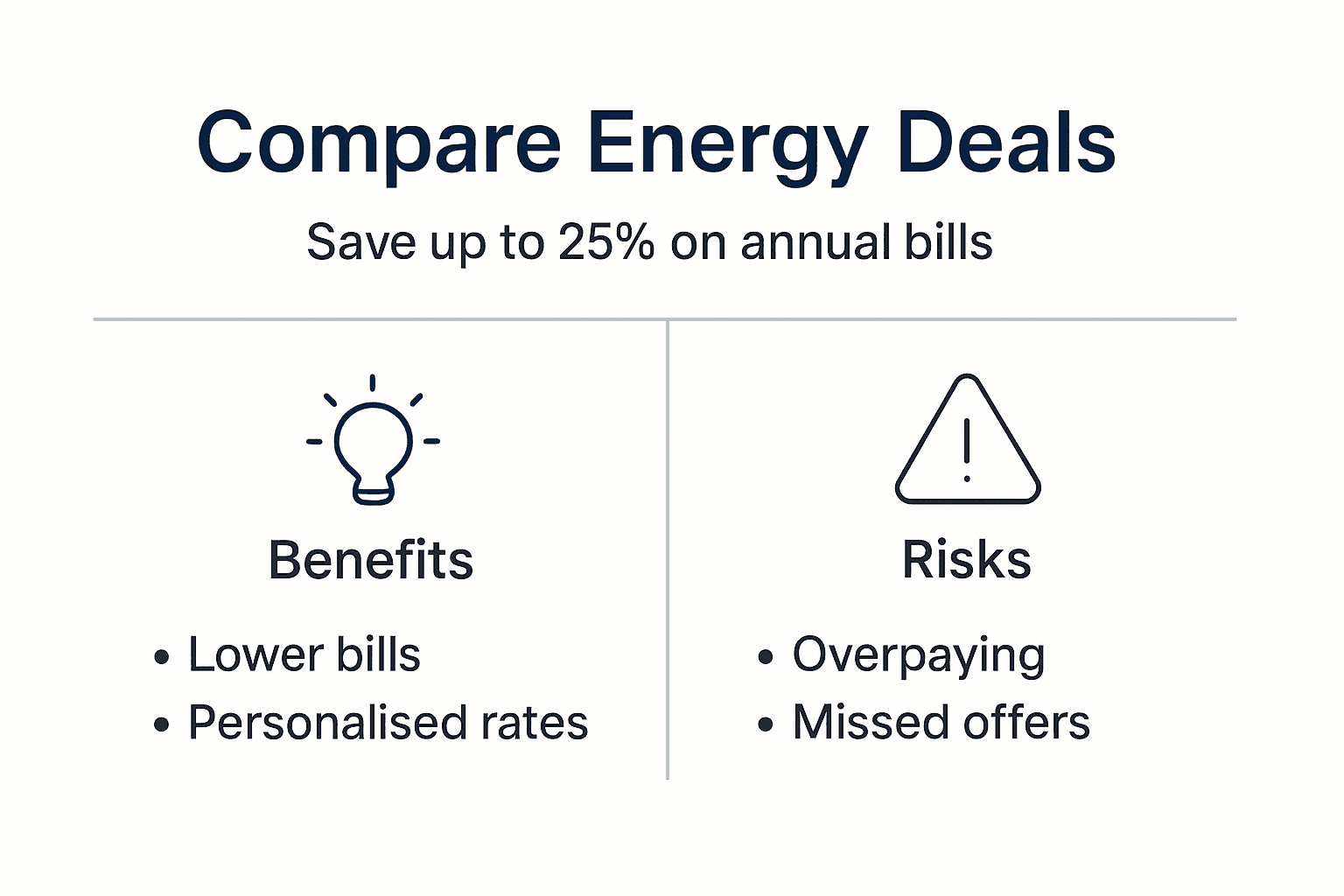
Remaining on standard variable tariffs after your fixed deal expires is the costliest mistake. Suppliers automatically roll you onto these expensive default rates, counting on inertia to boost their profit margins. Each year you delay switching potentially costs you £200-£300 compared to available competitive deals.
Perceived complexity and switching hassle deter many consumers despite the process being straightforward and quick. This psychological barrier enriches energy companies whilst draining your household budget. The irony is that avoiding a 15-minute comparison exercise costs you far more in wasted time earning money to pay inflated bills.
Key risks of comparison avoidance:
- Cumulative overpayments: Three years on a default tariff could waste £600-£900 compared to switching regularly.
- Missed fixed rate opportunities: Failing to lock in favourable rates before price rises costs you predictability and savings.
- Reduced budgeting accuracy: Variable default tariffs make household budgeting harder with unpredictable monthly costs.
- Opportunity cost: Money overpaid on energy can’t fund savings, debt reduction, or quality of life improvements.
Building a simple habit of reviewing your energy deal annually protects against these risks entirely. The switching process itself carries no risk thanks to regulatory protections, making comparison a zero-downside financial decision.
Avoiding costly mistakes when using comparison tools ensures you capture maximum savings without falling for misleading deals or hidden charges.
Putting comparison insights into everyday household savings
Transforming energy comparison knowledge into sustained savings requires building practical habits that become second nature. Regular review and smart usage monitoring work together to minimise your energy expenditure long term.
Set automatic reminders to review energy deals at least every 12-18 months, preferably 45 days before your current fixed tariff ends. This timing lets you compare deals calmly, switch before rolling onto default rates, and maintain continuous savings without gaps.
Combine deal comparison with tracking your energy usage for complete cost control. Smart metres and supplier apps show daily consumption, helping you identify wasteful habits and reduce usage alongside securing better rates. Paying less per unit whilst using fewer units multiplies your savings.
Use trusted websites like the trusted comparison platform for straightforward decision making backed by transparent data and regulatory compliance. Reliable comparison tools eliminate guesswork, presenting personalised results that account for your specific consumption patterns and location.
Practical savings habits to adopt:
- Annual deal review: Block time each year specifically for energy comparison, treating it as essential household maintenance.
- Usage monitoring: Check your smart metre weekly to spot consumption spikes and adjust behaviour.
- Contract calendar: Note your tariff end date prominently to trigger timely comparison before auto-renewal.
- Savings tracking: Calculate and record what you save by switching to reinforce the positive behaviour.
Pro Tip: Photograph your energy bill details and save them in a dedicated folder on your phone so you always have the information needed for quick comparisons when opportunities arise.
Building this routine ensures maximised long-term savings and budgeting certainty. Energy costs represent one of your largest household expenses, making regular optimisation through comparison a high-return activity for minimal time investment.
Discover better energy deals with Wise Choice Comparisons
Ready to stop overpaying on your energy bills and join thousands of UK households saving hundreds annually? Wise Choice Comparisons offers a straightforward way to compare energy deals from multiple suppliers in one convenient location, eliminating the hassle of visiting individual provider websites.

Our expert comparison tools save you time whilst maximising your potential savings, presenting personalised results based on your actual consumption and location. We aggregate transparent pricing from regulated suppliers, giving you confidence that you’re seeing genuine market rates without hidden charges or misleading promotional gimmicks.
Beyond energy comparison, explore our additional services and smart comparison tips to improve your overall household budgeting across insurance, broadband, and banking products. Visit our homepage today to start finding smarter, cheaper energy plans that put money back in your pocket where it belongs.
Frequently asked questions
How often should I compare energy deals to save money?
Compare energy deals every 12 to 18 months to avoid paying more on default tariffs after fixed deals expire. Regular review prevents long-term overpayments and ensures you consistently benefit from competitive market rates.
Is switching energy providers complicated or risky?
Switching usually takes about 17 days and is protected by UK regulations guaranteeing uninterrupted supply. There is no risk of losing energy during the switch, and your new supplier handles the entire transfer process including notifying your old provider.
Can fixed tariffs cost more than variable tariffs?
Fixed tariffs offer price certainty but can be costlier if market prices drop after you lock in your rate. Variable tariffs may be cheaper when wholesale prices fall sharply, though they expose you to price increases during market volatility.
What information do I need to compare energy deals accurately?
You need your postcode, current supplier name, tariff details, and annual consumption in kWh for both gas and electricity. This information appears on your energy bill and lets comparison tools calculate personalised savings projections based on your actual usage patterns.
Recommended
- Landing – Wise Choice Comparisons
- How to Save Hundreds Every Year Using Comparison Websites in the UK – Wise Choice Comparisons
- Services – Wise Choice Comparisons
- Top 10 UK Services You Should Compare Before Renewing in 2026 – Wise Choice Comparisons
- Let’s Save You Money On Your Home Loan Rates
- Tax Deadlines 2025: Critical Dates for UK Businesses