

Sorting through dozens of energy, water, and communication providers can make running a household feel overwhelming for many British families. Rising costs and changing tariffs mean comparing utilities is no longer a simple price check but a strategic step towards better financial management. This article highlights the importance of utility comparison in the United Kingdom, showing how transparent service evaluations and procurement regulations empower you to secure fair deals while keeping your monthly bills under control.
Table of Contents
- Understanding Utility Comparison And Its Role
- Types Of Utilities You Can Compare
- How The Comparison Process Works
- Regulation, Price Caps, And Consumer Rights
- Real Savings And Pitfalls To Avoid
- When And How To Switch Suppliers
Key Takeaways
| Point | Details |
|---|---|
| Utility Comparison Importance | Systematic evaluation of utility providers helps UK residents optimise expenses and service quality. Conduct this comparison at least biannually for best results. |
| Types of Utilities to Compare | Essential services include energy, water, communications, and heating. Each category has unique features and factors to consider when comparing providers. |
| Regulations and Consumer Rights | UK utility regulations provide essential consumer protections, including price caps and transparent tariff information. Familiarise yourself with your rights to avoid unfair practices. |
| Pitfalls to Avoid | Be cautious of hidden fees, variable tariffs, and incomplete data during comparisons. Thorough research on providers enhances the likelihood of real savings. |
Understanding Utility Comparison and Its Role
Utility comparison represents a strategic approach for UK residents to manage and reduce household expenses effectively. This process involves systematically evaluating different utility providers, their pricing structures, service quality, and overall value proposition. Utility procurement regulations play a crucial role in establishing the framework within which these comparisons occur.
At its core, utility comparison enables consumers to make informed decisions by providing transparent insights into various service options. The process goes beyond simple price comparisons and encompasses several critical evaluation criteria:
- Service reliability and performance metrics
- Contractual terms and flexibility
- Customer support quality
- Additional benefits or package inclusions
- Long-term cost implications
The broader significance of utility comparison extends into economic and behavioural domains. Interpersonal utility comparisons demonstrate how consumers evaluate satisfaction, cost, and service levels to optimize their personal welfare. This approach empowers individuals to make choices that align with their specific needs and financial constraints.
Pro tip: Conduct a comprehensive utility comparison at least twice annually to ensure you’re consistently receiving the most competitive rates and optimal service packages.
Types of Utilities You Can Compare
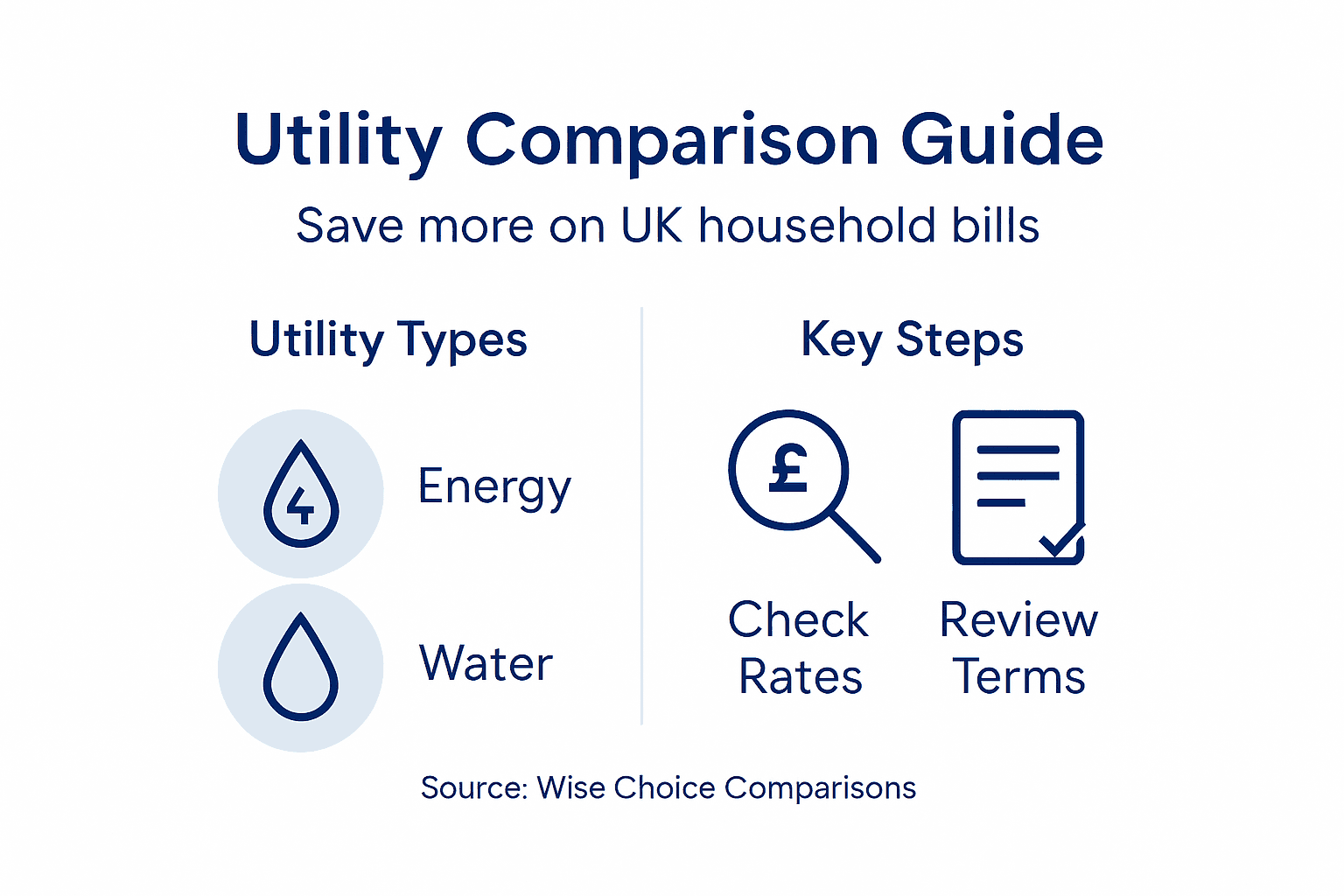
Utility comparisons in the UK cover a diverse range of essential services that impact household budgets and daily living. Utility procurement regulations outline the primary categories of utilities that consumers can effectively evaluate and compare to optimize their spending and service quality.
The main types of utilities available for comparison encompass several critical sectors:
- Energy Utilities
- Electricity providers
- Gas suppliers
- Renewable energy options
- Water Services
- Residential water supply
- Wastewater management
- Communication Utilities
- Broadband internet
- Mobile phone contracts
- Landline telephone services
- Heating and Thermal Utilities
- District heating networks
- Home heating oil
- Centralised heating systems
Each utility category presents unique comparison considerations. Energy providers, for instance, differ not just in pricing but in green energy commitments, contract flexibility, and additional service features. Water services, while seemingly uniform, can vary in pricing structures, water quality, and customer support levels.
To help clarify the differences and value between utility categories, here is a concise comparison table:
| Utility Type | Typical Providers | Key Service Features | Common Comparison Factors |
|---|---|---|---|
| Energy | National Grid, EDF | Renewable options, tariffs | Price, green credentials, flexibility |
| Water | Thames Water, Severn Trent | Quality, supply reliability | Cost, customer support |
| Communications | BT, Virgin Media | Broadband speed, mobile coverage | Speed, package deals, contract length |
| Heating | District Heating, oil suppliers | Network reliability, fuel types | Rates, energy source, efficiency |
Pro tip: Create a spreadsheet to track utility rates, contract terms, and service quality across different providers, enabling systematic and informed comparison decisions.
How the Comparison Process Works
Utility comparison involves a systematic approach to evaluating different service providers and their offerings. Consumer switching procedures are designed to make this process straightforward and transparent, enabling households to make informed decisions about their utility services.
The comprehensive comparison process typically involves several key stages:
- Information Gathering
- Collect current utility bills
- Determine average monthly consumption
- Identify specific service requirements
- Data Input
- Use comparison platforms
- Enter precise usage details
- Select specific utility categories
- Comparative Analysis
- Review pricing structures
- Examine contract terms
- Assess additional service features
- Decision Making
- Compare total cost implications
- Consider long-term value
- Select most suitable provider
The most effective comparisons go beyond simple price considerations, examining the holistic value of utility services.
Regulatory frameworks, including utility procurement guidelines, ensure that comparison processes remain fair, transparent, and competitive. This means consumers can trust the information provided and make decisions with confidence.

Pro tip: Update your utility comparisons biannually to ensure you’re consistently accessing the most competitive rates and service packages.
Regulation, Price Caps, and Consumer Rights
Utility regulation in the United Kingdom provides comprehensive protections designed to safeguard consumer interests and ensure fair market practices. Consumer protection policies establish robust frameworks that prevent exploitative pricing and maintain market transparency.
Key aspects of utility regulation include:
- Price Regulation Mechanisms
- Quarterly price cap reviews
- Maximum unit rate limitations
- Standing charge restrictions
- Consumer Protection Rights
- Clear tariff information
- Complaint resolution pathways
- Protection against unfair practices
- Vulnerable Consumer Support
- Special pricing considerations
- Additional assistance programmes
- Enhanced consumer safeguards
Regulatory bodies like Ofgem play a critical role in maintaining market fairness and protecting consumer interests.
Energy price cap regulations represent a fundamental mechanism for preventing excessive utility charges. These quarterly-reviewed caps ensure that suppliers cannot impose unreasonable rates, while simultaneously maintaining sufficient economic incentives for continued service provision.
Pro tip: Familiarise yourself with your specific consumer rights by reviewing Ofgem’s latest guidance and keeping records of all utility communications and agreements.
Real Savings and Pitfalls to Avoid
Navigating utility comparisons requires a strategic approach to maximise potential savings while avoiding common financial traps. Energy supplier switching advice highlights critical considerations that can significantly impact your overall utility expenses.
Common pitfalls consumers should be aware of include:
- Contractual Traps
- Hidden early termination fees
- Complex contract language
- Unexpected penalty clauses
- Pricing Misconceptions
- Misunderstanding variable tariffs
- Overlooking additional charges
- Failing to compare total costs
- Comparison Mistakes
- Relying on incomplete usage data
- Ignoring supplier reputation
- Falling for aggressive marketing tactics
True savings emerge from comprehensive, informed comparisons, not just headline rates.
Understanding the nuanced differences between fixed and variable tariffs can unlock substantial long-term savings. Consumers must carefully evaluate not just the initial pricing, but the entire contractual landscape, including potential future rate adjustments and service quality.
Below is a summary of common pitfalls and how to avoid them when comparing utility suppliers:
| Pitfall | Typical Scenario | How to Avoid |
|---|---|---|
| Hidden contract fees | Early exit charges surprise | Review contract details |
| Misjudging tariff types | Variable rates misunderstood | Check tariff explanations |
| Incomplete data usage | Estimate leads to higher costs | Use accurate consumption |
| Ignoring supplier reviews | Unreliable service delivered | Research provider reputation |
Pro tip: Create a detailed spreadsheet tracking all potential utility costs, including standing charges and projected usage, to reveal genuine savings opportunities.
When and How to Switch Suppliers
Deciding the optimal time to switch utility suppliers requires careful consideration of multiple factors, including contract terms, market conditions, and potential savings. Energy supplier switching guidelines provide critical insights into navigating this process effectively and minimising potential financial risks.
Key considerations for switching utility suppliers include:
- Optimal Switching Windows
- Final 49 days of current contract
- Periods of significant market rate changes
- When personal energy consumption patterns shift
- Contract Evaluation Criteria
- Remaining contract duration
- Potential exit fee amounts
- Current versus proposed tariff rates
- Preparatory Steps
- Gather recent utility bills
- Calculate average monthly consumption
- Research alternative provider offerings
Strategic switching can unlock substantial long-term savings, but timing is everything.
Understanding the switching process is crucial. The entire transition typically takes up to five working days, with built-in consumer protections like a 14-day cooling-off period that allows cancellation without penalty. Consumers should always compare total costs, not just headline rates, to ensure genuine financial benefits.
Pro tip: Set a calendar reminder 60 days before your current utility contract expires to begin comparative research and initiate the switching process strategically.
Take Control of Your Utility Bills Today with Wise Choice Comparisons
Managing rising utility costs and navigating the complex landscape of tariffs and supplier contracts can feel overwhelming. The article highlights how crucial it is to perform thorough utility comparisons that go beyond price to include factors like contract flexibility, service reliability, and consumer rights. If you want to avoid common pitfalls such as hidden fees and confusing tariff structures, Wise Choice Comparisons offers a transparent and user-friendly platform tailored for UK consumers.

Explore our impartial comparison tools at Wise Choice Comparisons to easily compare energy, water, broadband, and more. Benefit from clear, detailed insights that empower you to switch suppliers confidently and save money. Start your journey to smarter household budgeting now by visiting our Uncategorized – Wise Choice Comparisons section and discover how you can take control of your monthly expenses without hassle.
Frequently Asked Questions
What is utility comparison and why is it important?
Utility comparison is a strategic process of evaluating different utility providers based on pricing, service quality, and overall value. It is important because it empowers consumers to make informed decisions, potentially leading to significant savings on household bills.
How often should I compare my utility services?
It is recommended to conduct a comprehensive utility comparison at least twice annually to ensure you are receiving the most competitive rates and optimal service packages.
What types of utilities can I compare?
You can compare various types of utilities including energy (electricity and gas), water services, communication utilities (broadband and mobile), and heating services. Each category has unique features and pricing structures to consider.
What factors should I consider when comparing utility providers?
When comparing providers, you should consider service reliability, pricing structures, contract terms, customer support quality, and any additional benefits or features included in the service packages.