

Juggling everyday costs in the United Kingdom can feel like sorting through a maze of deals, sales pitches, and hard-to-read fine print. For those keen to protect their budget, truly impartial comparison stands out as a crucial tool. When platforms commit to full transparency and independence, you gain unbiased information that puts control back in your hands, making it easier to spot real value in insurance, utilities, and broadband.
Table of Contents
- Defining Impartial Comparison and Its Principles
- Variations in Comparison Platforms and Methods
- How Impartial Comparison Empowers UK Consumers
- Legal Standards and Regulatory Requirements
- Risks, Conflicts and Common Pitfalls to Avoid
Key Takeaways
| Point | Details |
|---|---|
| Impartial Comparison Principles | Conduct comparisons with independence, transparency, objectivity, and neutrality to protect consumer interests. |
| Diverse Comparison Platforms | Understand the variations in comparison platforms to select the one that best meets consumer needs. |
| Consumer Empowerment | Impartial comparison enhances informed decision-making, driving market competition and protecting consumer rights. |
| Regulatory Standards | Adhere to legal requirements for data protection, competition, and advertising to maintain consumer trust and platform integrity. |
Defining Impartial Comparison and Its Principles
Impartial comparison represents a fundamental approach to evaluating services, products, or options with complete objectivity and transparency. At its core, this principle ensures that comparisons are conducted without bias, external influence, or undue pressure from economic, political, or personal interests. By adhering to strict ethical standards, impartial comparison protects consumers’ interests and enables them to make well-informed decisions.
The foundational principles of impartial comparison are rooted in several critical components:
- Independence from financial or commercial pressures
- Transparency in methodology and data sources
- Objectivity in presenting comparative information
- Neutrality in outcome evaluation
- Comprehensive analysis across multiple dimensions
In the United Kingdom, the concept of impartiality has been rigorously examined through various professional contexts. Research on institutional independence highlights the critical role of maintaining ethical standards when providing comparisons or guidance. This involves creating systematic frameworks that eliminate potential conflicts of interest and ensure consumers receive unbiased, accurate information.
European research on research integrity further reinforces these principles by emphasising the importance of excluding political, economic, or ideological pressures that might compromise objective analysis. The goal is to create a trustworthy environment where comparisons serve the genuine interests of consumers rather than promoting specific commercial agendas.
Pro tip: Always cross-reference multiple sources and look for comparisons that clearly disclose their methodology to ensure true impartiality.
Variations in Comparison Platforms and Methods
Comparison platforms have evolved significantly, transforming how consumers access and evaluate information about various services and products. These digital platforms differ substantially in their approach, functionality, and capacity to empower consumers, creating a complex landscape of digital comparison tools. Understanding these variations is crucial for users seeking comprehensive and reliable information.
The key dimensions of variation in comparison platforms include:
- Data Coverage: Breadth and depth of service categories compared
- User Interface: Ease of navigation and information presentation
- Update Frequency: How often pricing and service details are refreshed
- Filtering Capabilities: Options for personalised comparisons
- Additional Features: Tools like price alerts, historical trend analysis
Consumer Digital Empowerment Index research reveals significant variations across European digital platforms. These differences manifest in how effectively platforms facilitate consumer choice, with some excelling in information transparency while others struggle to provide comprehensive, unbiased comparisons.
Digital comparison platforms can be categorised into several distinct models. Some focus on aggregating data from multiple sources, providing a broad overview of market options. Others specialise in niche markets, offering deep, specialised comparisons with granular details. The sophistication of algorithmic matching, data verification processes, and user experience design further distinguishes these platforms, creating a diverse ecosystem of consumer empowerment tools.
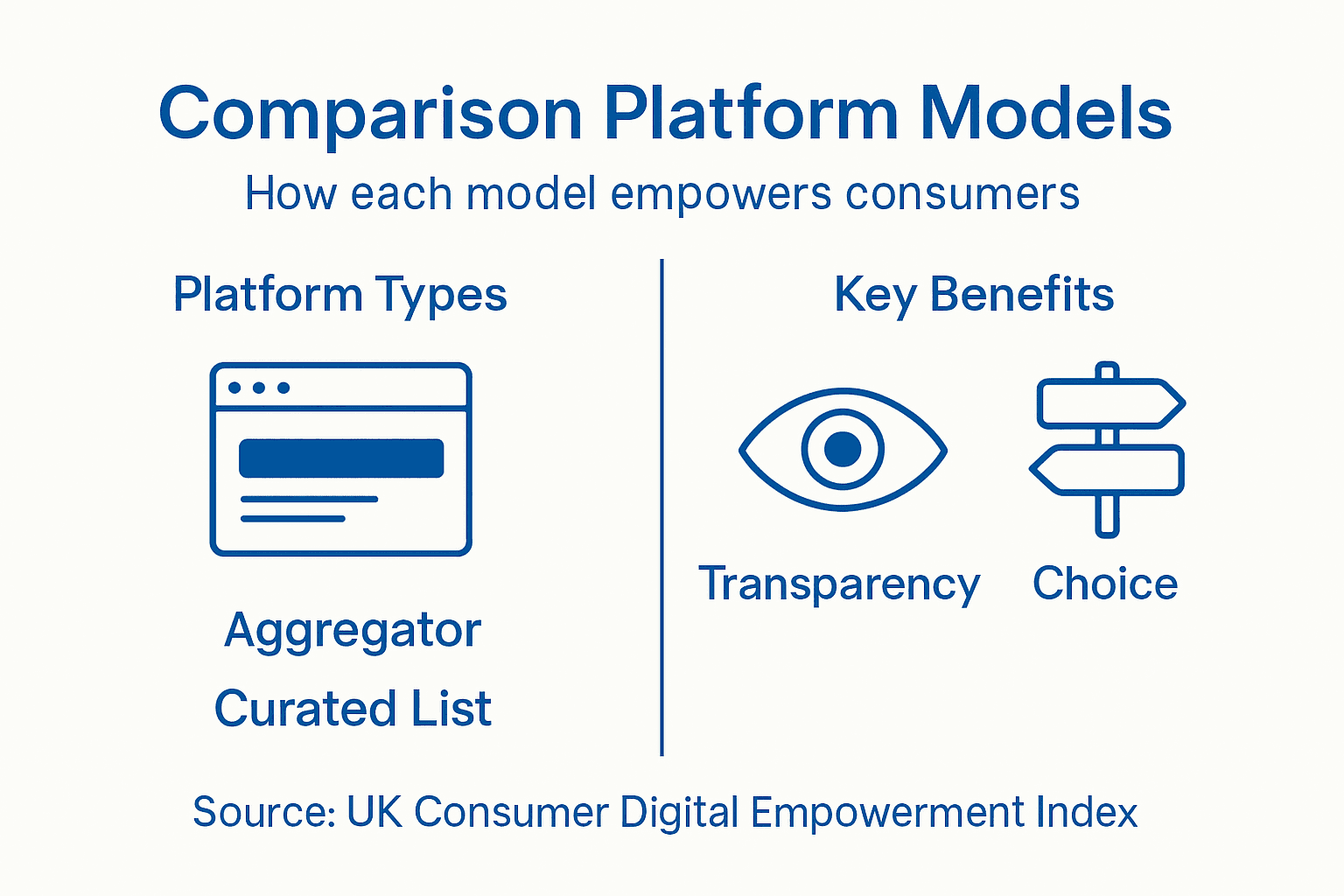
To clarify how various comparison platform models serve different user needs, consider the following overview:
| Platform Model | Typical Focus | User Benefit |
|---|---|---|
| Aggregator | Wide service categories | Broad market overview |
| Niche Specialist | Single sector or product | In-depth analysis, tailored insights |
| Algorithmic Matching | Automated personalised results | Rapid, relevant comparisons |
| Expert Verification | Human-reviewed data | Trusted accuracy, reduced errors |
Pro tip: Always check multiple comparison platforms and cross-reference their methodologies to get the most comprehensive view of available options.
How Impartial Comparison Empowers UK Consumers
Consumer empowerment through impartial comparison represents a transformative approach to navigating complex service markets in the United Kingdom. By providing transparent, unbiased information, these platforms enable individuals to make more informed decisions, ultimately driving market competition and individual financial well-being. The power of impartial comparison lies in its ability to democratise access to critical information across various service sectors.
Key mechanisms of consumer empowerment include:
- Transparent Price Comparisons: Revealing true market rates
- Unbiased Service Evaluations: Presenting objective performance metrics
- Comprehensive Market Insights: Providing detailed service breakdowns
- Consumer Rights Protection: Highlighting terms and conditions
- Financial Decision Support: Enabling informed purchasing strategies
UK government research underscores the significance of impartial comparison as a tool for driving market innovation and consumer protection. By fostering transparency and facilitating more informed choices, these platforms help consumers navigate increasingly complex service landscapes with greater confidence and strategic awareness.

Moreover, regulatory bodies like the Competition and Markets Authority actively support such comparative mechanisms. Their interventions demonstrate how impartial comparison serves not just individual consumers, but contributes to broader market fairness and economic efficiency. By providing consumers with comprehensive, accessible information, these platforms challenge service providers to maintain competitive standards and deliver genuine value.
Pro tip: Always review multiple comparison platforms and cross-reference their methodologies to gain the most comprehensive understanding of available options.
Legal Standards and Regulatory Requirements
The legal landscape governing comparison platforms in the United Kingdom represents a sophisticated framework designed to protect consumer interests and ensure market transparency. These regulatory mechanisms create a robust environment that mandates fairness, accuracy, and accountability for businesses providing comparative services across various sectors.
Key regulatory requirements for comparison platforms include:
- Data Protection: Compliance with UK data privacy laws
- Consumer Rights: Transparent and accurate information disclosure
- Competition Standards: Preventing anti-competitive practices
- Advertising Regulations: Avoiding misleading commercial claims
- Redress Mechanisms: Ensuring consumer complaint resolution
Regulatory landscape research highlights the evolving nature of legal standards governing digital comparison services. The frameworks are increasingly sophisticated, addressing complex challenges such as data integrity, consumer protection, and fair market representation while maintaining flexibility for technological innovation.
UK standards and regulatory requirements emphasise the critical importance of maintaining high-integrity information platforms. Businesses must navigate stringent compliance protocols that include rigorous checks on product safety, information accuracy, and transparent communication. These regulations serve a dual purpose of protecting consumers and maintaining a competitive, innovative market ecosystem.
Here is a concise summary of major regulatory requirements that affect UK comparison platforms:
| Requirement | Description | Impact on Consumers |
|---|---|---|
| Data Protection | Adherence to GDPR and UK privacy laws | Safer personal information |
| Competition Standards | Preventing unfair dominance or bias | Fair choice and market access |
| Advertising Rules | Ban on misleading claims | Reliable product representation |
| Complaint Redress | Mandatory dispute handling processes | Improved consumer trust |
Pro tip: Regularly review the latest regulatory updates to ensure your comparison platform remains fully compliant with current legal standards.
Risks, Conflicts and Common Pitfalls to Avoid
Navigating the landscape of comparison platforms requires a critical understanding of potential risks and systemic challenges that can compromise consumer interests. While these platforms aim to provide transparent and helpful information, numerous pitfalls can undermine their effectiveness and potentially mislead users seeking reliable guidance.
Common risks and challenges in comparison platforms include:
- Algorithmic Bias: Hidden prejudices in data selection
- Incomplete Transparency: Opaque methodology in comparisons
- Conflict of Interest: Potential financial incentives skewing recommendations
- Data Security: Risks of personal information mishandling
- Limited Consumer Representation: Inadequate feedback mechanisms
Consumer Conditions Scoreboard research highlights the increasing complexity of digital comparison environments. These platforms face significant challenges in maintaining genuine impartiality, with risks including misinformation, unclear algorithmic processes, and potential manipulation of comparative data to favour specific service providers.
Global consumer dispute resolution studies reveal systemic issues that can compromise platform integrity. Challenges such as insufficient consumer participation in policy design, limited regulatory enforcement, and restricted access to effective redress mechanisms can significantly undermine the trust and utility of comparison platforms. Consumers must remain vigilant and critically evaluate the sources and methodologies behind comparative information.
Pro tip: Always cross-reference comparison platform results with multiple independent sources and carefully examine their disclosed methodologies.
Empower Your Household Spending With Impartial Comparison
The article highlights how impartial comparison is essential for consumer empowerment by providing transparency, unbiased evaluations, and trusted market insights. Many UK consumers struggle with incomplete information and hidden biases when choosing services in insurance, utilities, broadband, or banking. Wise Choice Comparisons directly addresses these challenges by offering a fully independent and easy-to-use platform that consolidates trusted quotes from regulated providers. This helps you avoid conflicts of interest and make confident, money-saving decisions in essential household expenses.

Take control of your finances today by exploring free and transparent comparisons at Wise Choice Comparisons. Discover better deals across multiple categories including insurance and utilities through our impartial portal. Do not wait for confusing platforms or unclear information. Visit Wise Choice Comparisons now and empower yourself with clarity and choice. Your next smart decision starts here.
Frequently Asked Questions
What is impartial comparison and why is it important?
Impartial comparison is an unbiased and transparent method of evaluating services or products. It ensures that comparisons are conducted objectively, protecting consumers and enabling informed decision-making.
How can consumers ensure the comparisons they are using are impartial?
Consumers can ensure impartiality by cross-referencing multiple sources, looking for comparisons that disclose their methodology, and checking for transparency in data sources and analysis processes.
What features should I look for in a comparison platform?
Key features to look for include data coverage across service categories, user-friendly interface, frequent updates, filtering capabilities for personalised comparisons, and additional tools like price alerts or historical trend analyses.
What are the potential risks associated with using comparison platforms?
Common risks include algorithmic bias, incomplete transparency in methodologies, conflicts of interest, data security issues, and limited consumer representation, all of which can compromise the effectiveness of comparison platforms.