

Finding affordable home insurance that truly protects your property without breaking your budget is a challenge many UK homeowners face. Cheap policies often hide coverage gaps that cost you later. This guide delivers a practical workflow to help you compare policies systematically, save around 15% on premiums, and secure the coverage your home deserves. Research shows 40% of UK consumers switch to better coverage within a year after initially choosing the cheapest policy, proving that rushed decisions cost time and money.
Table of Contents
- Prerequisites For Comparing Home Insurance Efficiently
- Step By Step Comparison Methodology Tailored For UK Market
- How To Assess Value Beyond Price In Insurance Policies
- Common Pitfalls In Comparing Home Insurance Quotes And How To Avoid Them
- Expected Savings And Timeline Benchmarks From Comparison Activities
- Simplify Your Home Insurance Comparison With Wise Choice Comparisons
- Frequently Asked Questions About Home Insurance Comparison
Key Takeaways
| Point | Details |
|---|---|
| Preparation matters | Accurate property data and budget targets prevent wasted time and inflated quotes. |
| Compare strategically | Evaluate at least 3 to 5 quotes on coverage quality, claims reputation, and exclusions, not just price. |
| Watch for hidden costs | Premium differences up to 40% stem from exclusions and coverage gaps that undermine value. |
| Expect real savings | Following this workflow typically delivers 15% annual premium savings with proper execution. |
| Use digital tools | Online comparison platforms cut research time by half and improve decision accuracy. |
Prerequisites for Comparing Home Insurance Efficiently
Before diving into quotes, gather the essential information and knowledge that make your comparison accurate and effective. Skipping this step leads to incorrect quotes, wasted time, and poor decisions.
Start by collecting detailed property information. Insurers need your building type, construction age, security features, alarm systems, and flood risk level to calculate realistic premiums. Missing or vague details force insurers to estimate, often inflating your quote unnecessarily.
Set a clear household budget limit before you begin. Knowing your spending cap focuses your search and prevents you from considering policies outside your financial comfort zone. This discipline saves time and reduces decision fatigue.
Understand basic insurance terminology to evaluate policies properly. Terms like premium, excess, coverage limits, and exclusions directly affect your protection and costs. Misunderstanding these concepts leads to underinsurance or overpaying for features you don’t need.
Have your previous insurance documents ready for benchmarking. Comparing new quotes against your current or past coverage helps you spot potential savings and identify improvements. Accurate property information and previous quotes improve quote accuracy significantly when you save hundreds every year using comparison websites.
Key preparation items include:
- Complete property details including postcode, construction type, and security features
- Clear monthly or annual budget allocation for home insurance premiums
- Understanding of policy terms like voluntary excess, compulsory excess, and coverage exclusions
- Copies of current and previous insurance policies for benchmarking
- List of valuable items requiring additional coverage beyond standard limits
Step by Step Comparison Methodology Tailored for UK Market
Once you’ve prepared, follow this structured workflow to collect and evaluate home insurance quotes systematically. This process balances thoroughness with efficiency, helping you make confident decisions without drowning in information.
Step 1: Finalize your property details and budget ceiling. Double check every data point before requesting quotes. One incorrect entry, like understating your property value, can invalidate future claims or produce useless quotes.
Step 2: Request quotes from 3 to 5 different insurers or aggregators. This range gives you enough diversity to spot competitive pricing without overwhelming yourself with options. Too few quotes miss savings opportunities. Too many create analysis paralysis.
Step 3: Compare quotes systematically using a structured checklist. Don’t just scan premium amounts. Evaluate coverage limits, excess amounts, exclusions lists, optional add-ons, and claims process reputation side by side. Create a simple spreadsheet or use a comparison tool that displays these factors clearly.

Step 4: Leverage trusted digital comparison platforms. Online aggregators access multiple insurers simultaneously, saving hours of manual research. They also update quotes in real time, ensuring you see current market rates. Using a checklist and comparing 3 to 5 providers balances effort and quality, as shown in smart tips for comparing insurance quotes. Platforms like Wise Choice comparison services streamline this process significantly.
Step 5: Read the policy fine print thoroughly before committing. Pay special attention to exclusion clauses, excess requirements, and coverage limitations. These details determine whether your policy actually protects you when you need it most.
Your comparison checklist should track:
- Annual or monthly premium amount
- Total excess amount including voluntary and compulsory portions
- Coverage limits for buildings, contents, and specific items
- Named exclusions and high risk situations not covered
- Insurer financial strength ratings and claims payout reputation
- Customer service reviews and complaints records
Pro Tip: Prioritize policy clarity and insurer reputation over the absolute lowest premium. A slightly higher premium from a reliable insurer with transparent terms prevents claim disputes and coverage gaps that cost far more later. You can learn additional comparison strategies learned from life insurance approaches that apply here.
How to Assess Value Beyond Price in Insurance Policies
The cheapest premium rarely delivers the best value. True insurance value comes from comprehensive coverage, manageable excess, and an insurer who pays claims fairly and promptly.
Hidden exclusions create the most significant premium differences between policies. One policy might seem affordable but exclude flood damage, subsidence, or accidental damage that your home genuinely needs. Another policy costs slightly more but covers these risks comprehensively. Premium differences up to 40% result from hidden exclusions and coverage gaps, making price alone a terrible comparison metric.
Check the insurer’s claims process reputation using independent review platforms. An insurer with poor claims handling creates stress and delays when you need help most. Customer reviews reveal patterns of claim denials, slow processing, or poor communication that official materials hide.
Understand key policy terms deeply. Your excess amount is what you pay out of pocket before insurance covers a claim. Lower premiums often come with higher excess amounts, shifting more financial risk to you. Coverage limits cap how much the insurer pays per incident or item. Endorsements modify standard coverage, either adding protection or introducing restrictions.
Avoid underinsurance by ensuring your coverage limits match your property’s rebuild cost and contents value. Using outdated valuations or guessing creates dangerous gaps that leave you financially exposed after a loss. Find detailed guidance on insurance coverage quality tips to avoid this trap.
“Choosing the cheapest policy without checking coverage can cost up to 40% more in claims or gaps.”
Value assessment factors include:
- Comprehensive coverage for risks relevant to your property location and condition
- Reasonable excess amounts you can afford to pay during a claim
- Insurer claims payout track record verified through independent reviews
- Clear policy language without confusing jargon or hidden clauses
- Financial stability ratings showing the insurer can pay large claims
Common Pitfalls in Comparing Home Insurance Quotes and How to Avoid Them
Even with a solid workflow, specific mistakes undermine your comparison efforts and lead to poor insurance decisions. Recognizing these pitfalls helps you avoid costly errors.
Picking solely the cheapest policy without scrutinizing coverage details is the most frequent mistake. Low premiums attract attention, but they often signal reduced coverage, higher excess, or exclusions that matter for your property. 40% of homebuyers choose cheapest policies that cause later dissatisfaction, forcing expensive mid-term switches.
Providing incomplete or inaccurate property information produces unrealistic quotes. Insurers adjust premiums sharply when they discover errors during underwriting or claims. Inaccurate data causes inflated quotes in 20% of cases, wasting your time and creating frustration. Verify every detail before submitting information.
Ignoring insurer reputation and customer service reviews leads to claim disputes later. An unreliable insurer with poor reviews might offer tempting premiums but creates nightmares when you file claims. Always research customer experiences through independent platforms, not just the insurer’s marketing materials.
Falling for confusing add-ons and marketing jargon obscures real costs and coverage. Insurers bundle optional features with attractive names that sound essential but duplicate existing coverage or protect against unlikely risks. Read descriptions carefully and decline add-ons you genuinely don’t need.
Rushing the decision without reading policy documents thoroughly causes regret. Skimming exclusions or coverage limits means unpleasant surprises during claims. Invest time upfront to understand exactly what you’re buying. Learn from common comparison mistakes others make.
Avoidance strategies:
- Balance price with coverage quality and insurer reputation in every decision
- Triple check property data accuracy before requesting quotes
- Research insurer reviews on independent platforms alongside comparison results
- Decline unnecessary add-ons that don’t match your specific risks
- Allocate sufficient time to read full policy documents before purchasing
Pro Tip: Use review platforms alongside comparison results to verify insurer reliability. Cross referencing multiple sources reveals consistent patterns you can trust.
Expected Savings and Timeline Benchmarks from Comparison Activities
Understanding realistic savings potential and time investment helps you evaluate whether this workflow delivers worthwhile returns for your effort.
Structured home insurance comparison saves about 15% on premiums on average when done properly. This percentage translates to meaningful annual savings for most households, easily covering several hundred pounds over a policy year. Individual results vary based on your current premium, property characteristics, and how thoroughly you compare.
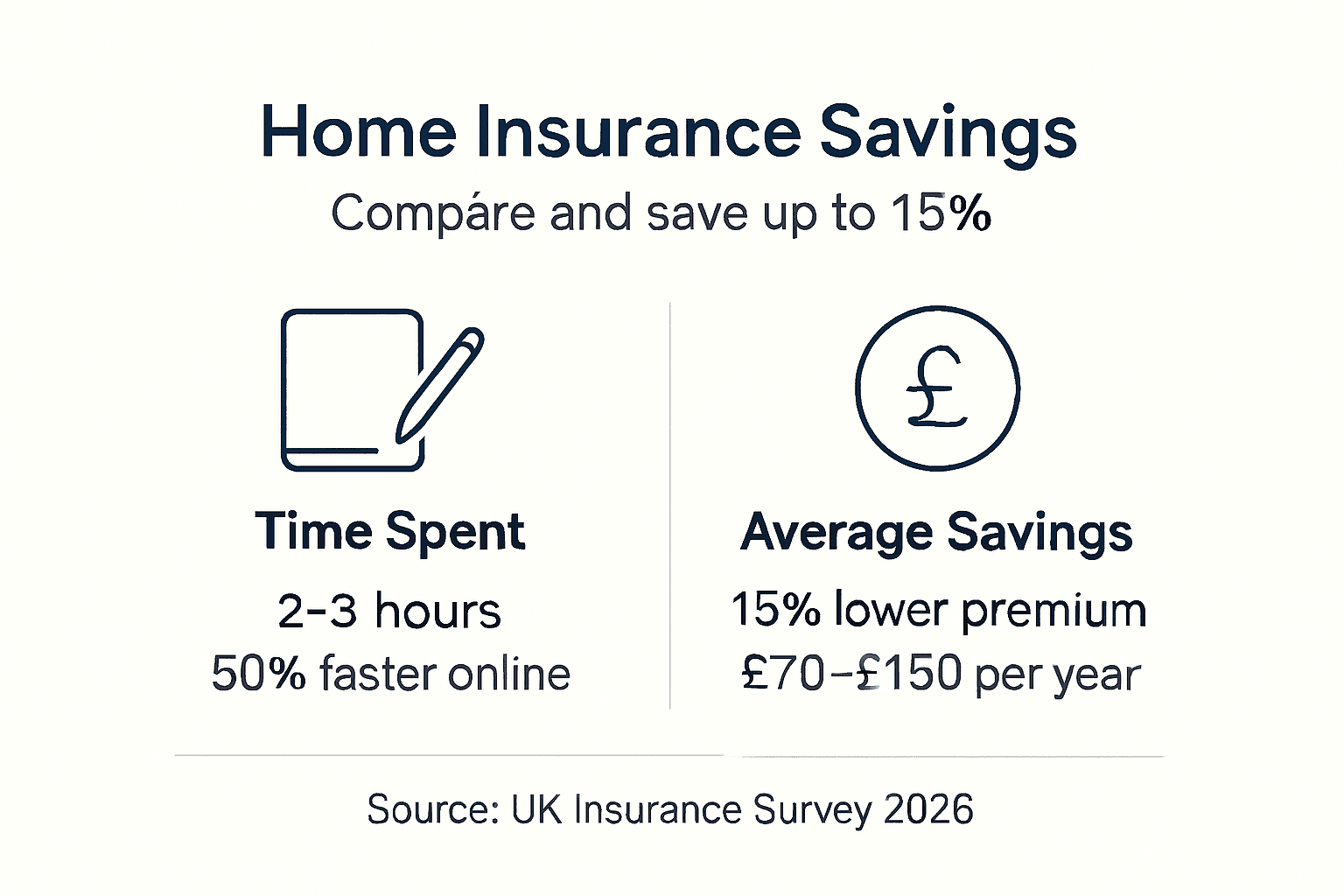
Typical time investment for thorough comparison is 2 to 3 hours total. This includes gathering property details, requesting quotes, evaluating coverage systematically, and reading policy documents. Breaking this into shorter sessions over a few days prevents fatigue and improves decision quality.
Using online aggregated platforms cuts research time by approximately 50% compared to contacting insurers individually. These tools also improve savings potential by around 10% by surfacing competitive quotes you might miss manually. The efficiency gain makes digital comparison tools worthwhile for most homeowners.
Savings magnitude depends on comparison thoroughness, quote quantity, and coverage preferences. Collecting more quotes generally increases savings chances, but diminishing returns set in after 5 to 6 providers. Prioritizing coverage quality over absolute lowest price produces better long term value. Explore more strategies in the home insurance savings blog.
| Comparison Method | Time Required | Average Savings | Effort Level |
|---|---|---|---|
| Manual individual insurer contact | 4 to 5 hours | 10 to 12% | High |
| Online comparison platforms | 2 to 3 hours | 15 to 18% | Medium |
| Hybrid approach with platform plus direct quotes | 3 to 4 hours | 18 to 20% | Medium to High |
Key benchmarks to remember:
- Average premium savings of 15% justify the comparison effort for most households
- Initial comparison takes 2 to 3 hours spread across property research and quote evaluation
- Digital platforms reduce time investment while maintaining or improving savings outcomes
- Annual reviews ensure continued competitive pricing as market rates change
Simplify Your Home Insurance Comparison with Wise Choice Comparisons
Applying this workflow becomes easier with the right tools and expert guidance. Wise Choice Comparisons offers UK homeowners a streamlined platform to compare home insurance efficiently.
Our user-friendly digital tools let you access multiple trusted providers simultaneously, displaying transparent coverage details side by side. This saves hours of manual research while ensuring you see competitive, up-to-date quotes tailored to your property.

We provide proven comparison methods developed specifically for the UK market, helping you avoid common pitfalls and secure genuine savings. Our platform emphasizes coverage quality and insurer reputation alongside pricing, ensuring you make informed decisions.
Explore smart tips for comparing insurance quotes and discover how Wise Choice comparison services simplify your insurance decisions. Start comparing today and save hundreds every year using comparison websites designed for homeowners like you.
Frequently Asked Questions About Home Insurance Comparison
How often should I compare home insurance quotes to maintain competitive pricing?
Review your home insurance annually, ideally 3 to 4 weeks before your renewal date. This timing gives you enough lead time to compare quotes thoroughly and switch providers if needed without coverage gaps. Market rates change constantly, and your circumstances evolve, making annual reviews essential for ongoing savings.
Can switching home insurance providers affect my claims history or future premiums?
Switching providers does not erase your claims history, as insurers share this information through industry databases. However, switching to a provider with better rates for your risk profile can lower premiums significantly. Always disclose your claims history accurately, as hiding claims risks policy cancellation and affects future coverage availability.
What property information impacts home insurance quotes most significantly?
Property age, construction type, security features, and location drive premium calculations most heavily. Older properties or non-standard construction typically cost more to insure. Postcode determines flood risk, crime rates, and regional claim patterns, all affecting pricing. Accurate reporting of these factors ensures realistic quotes.
Do online comparison platforms show quotes from all UK home insurance providers?
No platform covers every insurer, as some providers sell directly only or choose selective aggregator partnerships. Using 1 to 2 comparison platforms plus checking a few direct insurers gives you the broadest market view. This hybrid approach balances convenience with comprehensive coverage of available options.
Should I bundle home and contents insurance or keep them separate?
Bundling usually offers convenience and modest discounts, typically 5 to 10% compared to separate policies. However, compare bundled quotes against separate policies from different insurers. Sometimes mixing providers delivers better overall value, especially if your contents value significantly differs from typical property ratios.
How do I determine the correct rebuild cost for my property coverage?
Use a professional rebuild cost calculator provided by insurers or the Royal Institution of Chartered Surveyors. Rebuild cost differs from market value, focusing on construction expenses rather than land value. Underestimating this figure creates dangerous underinsurance gaps, while overestimating unnecessarily raises premiums.