

Did you know that using an insurance broker could slash your household insurance premiums by 10% to 20%? For UK residents navigating the maze of insurance policies, brokers offer expert guidance that transforms confusing jargon into clear, cost-effective choices. This article reveals how brokers simplify complex policies, unlock exclusive deals, and protect your financial interests through rigorous regulation.
Table of Contents
- The Challenge of Choosing Insurance In The UK
- How Insurance Brokers Simplify Complex Policies
- Financial Benefits: Saving Money And Accessing Better Deals
- Common Misconceptions About Insurance Brokers
- Regulations And Consumer Protection For UK Brokers
- Beyond Basics: How Brokers Add Value Beyond Comparison Websites
- Practical Steps To Choosing And Working With A Broker
- Summary: Making Informed Insurance Choices With Brokers
- Explore Wise Choice Comparisons For Smarter Insurance Decisions
Key Takeaways
| Point | Details |
|---|---|
| Expert Simplification | Brokers decode complex insurance terms and tailor coverage to your specific needs |
| Significant Savings | Professional brokers deliver 10% to 20% premium reductions through exclusive market access |
| Regulatory Protection | FCA oversight ensures brokers prioritize your interests despite commission structures |
| Myth Busting | Brokers cost less than you think and provide unbiased advice across all policy types |
The Challenge of Choosing Insurance in the UK
Insurance policies speak a language most UK consumers don’t understand. Terms like “excess,” “indemnity,” and “exclusions” turn straightforward protection into confusing contracts. When you’re comparing dozens of home, car, or life insurance options, this complexity creates paralysis rather than clarity.
The variety overwhelms even informed shoppers. You face direct insurers, aggregator websites, and specialist providers, each claiming the best deal. Making the wrong choice costs real money in two ways: overpaying for coverage you don’t need or, worse, discovering gaps when you file a claim.
Without expert assessment, 30% of UK policies bought directly online suffer from underinsurance. This statistic reveals a troubling reality. Consumers think they’re saving money by going direct, but they’re actually gambling with their financial security.
Common mistakes compound these risks:
- Selecting the cheapest policy without understanding coverage limitations
- Failing to disclose relevant information that invalidates claims later
- Overlooking bundling opportunities that reduce overall household costs
- Missing specialist policies better suited to unique circumstances
These pitfalls explain why exploring insurance services with professional guidance protects both your wallet and peace of mind. Expert help transforms insurance from a gamble into a strategic decision.
How Insurance Brokers Simplify Complex Policies
Brokers translate insurance speak into plain English. When you’re staring at a policy document filled with legal terminology, they explain exactly what’s covered and what’s not. They break down exclusions, excess amounts, and coverage limits so you understand precisely what you’re buying.
This translation goes beyond vocabulary. Brokers assess your specific risk profile rather than offering generic solutions. A young family needs different home insurance than retired empty nesters. A delivery driver requires specialized car coverage that office workers don’t. Brokers provide tailored advice based on personal risk assessment, reducing underinsurance by matching policies to real circumstances.
They protect you from two expensive mistakes. First, they prevent underinsurance by identifying coverage gaps before claims happen. Second, they eliminate unnecessary extras that inflate premiums without adding meaningful protection. This surgical approach to policy selection saves money while improving actual coverage.
Brokers act as your advocate during the entire insurance journey:
- Negotiating with insurers to secure better terms and pricing
- Explaining policy renewals and identifying better alternatives annually
- Supporting claims processes to ensure fair, prompt settlements
- Monitoring market changes that might benefit your coverage strategy
Pro Tip: Before meeting a broker, list your assets, concerns, and budget limits. This preparation helps brokers recommend the most relevant policies quickly, saving time and ensuring you don’t overlook critical coverage needs.
The value extends beyond purchase. When claims arise, brokers guide you through paperwork and advocate for fair treatment. This ongoing relationship proves especially valuable during stressful situations when comparing insurance quotes becomes the last thing on your mind.
Financial Benefits: Saving Money and Accessing Better Deals
Brokers unlock doors that online searches can’t open. They access exclusive insurer panels and negotiate bulk discounts unavailable to individual consumers. These relationships translate directly into lower premiums. Using brokers can save consumers 10% to 20% on household insurance premiums compared to direct purchases.

The savings mechanism works through market access. Brokers maintain relationships with dozens of insurers, including specialist providers that don’t advertise publicly. When you search online, you see maybe 10 to 15 options. Brokers compare 40 to 50 possibilities, dramatically expanding your choices.
Bundling multiplies these savings. Combining home, car, and life insurance through one broker often triggers multi-policy discounts. These packages reduce administrative hassle while cutting total household insurance costs by an additional 5% to 15%. The convenience alone justifies the approach, but the financial benefit seals the deal.
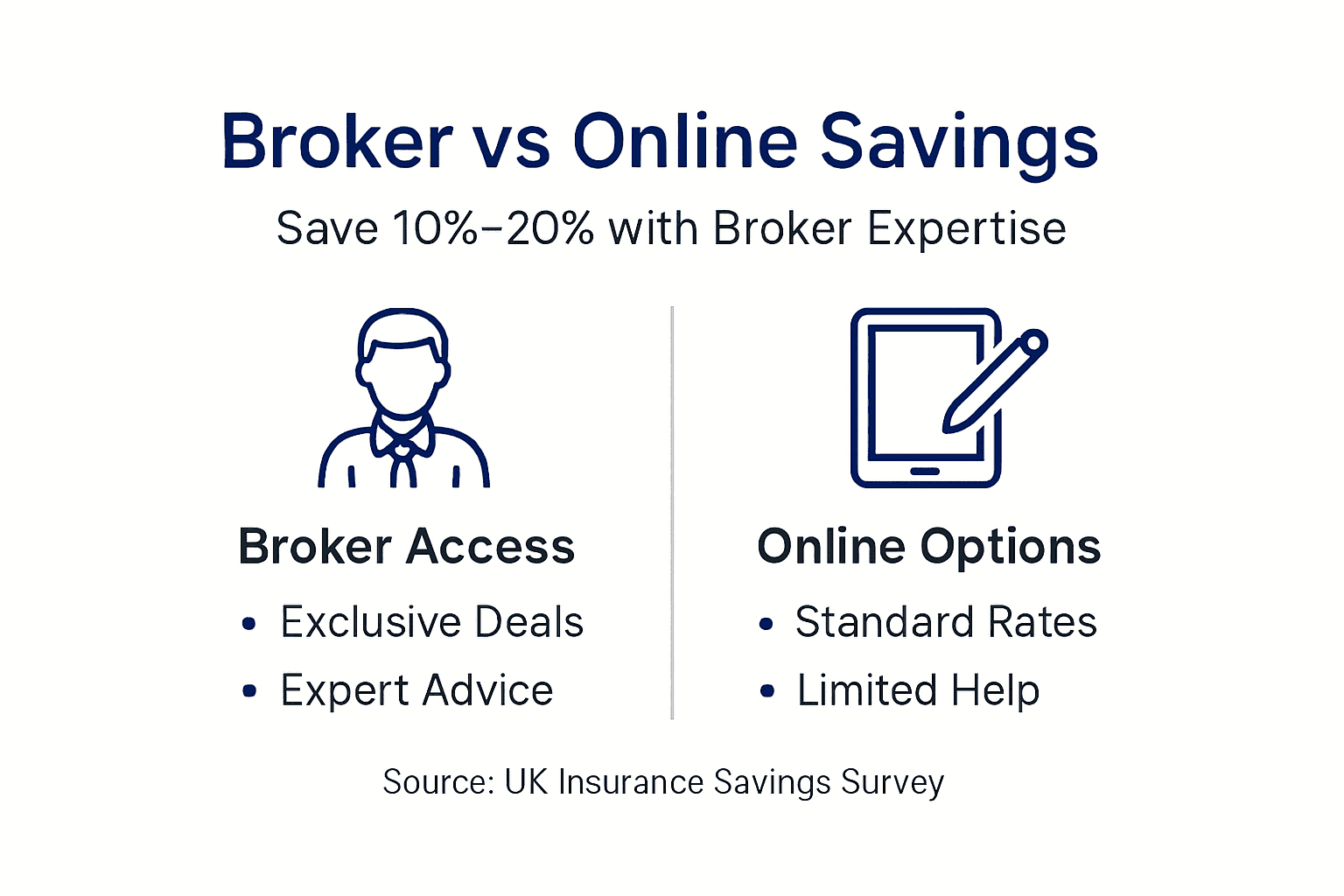
Brokers prioritize value over price. The cheapest policy frequently delivers the worst coverage. Brokers identify the sweet spot where adequate protection meets affordable premiums. This nuanced comparison prevents the false economy of buying inadequate insurance that costs more when claims get rejected.
Comparison of Insurance Purchase Methods:
| Method | Market Access | Expert Advice | Exclusive Deals | Claims Support | Typical Cost |
|---|---|---|---|---|---|
| Insurance Broker | 40 to 50 insurers | Personalized assessment | Yes | Full advocacy | Often 10% to 20% lower |
| Direct Purchase | Single insurer | Self-service only | Limited | Basic helpline | Standard rates |
| Online Comparison | 10 to 15 insurers | Algorithm-based | Some | Minimal | Variable savings |
Pro Tip: Ask brokers about payment flexibility. Many offer interest-free monthly installments that direct insurers charge extra fees for, further improving affordability without compromising cash flow.
Combining broker expertise with platforms focused on saving money with comparison websites creates a powerful strategy. Use comparison sites to understand market baselines, then leverage brokers to access deals beyond those platforms. This dual approach, supported by comparing insurance quotes tips, ensures you’re genuinely getting the best available deal. Start exploring options on the insurance comparison landing page to see immediate possibilities.
Common Misconceptions About Insurance Brokers
Many consumers avoid brokers believing they push expensive policies to earn higher commissions. This myth persists despite being factually wrong. FCA regulation mandates brokers to act in clients’ best interest despite receiving commissions. Regulatory rules require transparency and client-first recommendations, with severe penalties for violations.
The cost concern equally misses reality. Brokers don’t charge separate fees in most cases because insurer commissions cover their services. You pay the same premium whether buying direct or through a broker, but the broker version includes expert advice and ongoing support. Given the 10% to 20% savings brokers typically deliver, their services often cost less than going alone.
Another misconception suggests brokers only handle complex commercial policies. In truth, brokers serve all insurance needs, from straightforward car insurance to specialist coverage. They’re particularly valuable for standard policies because their market knowledge identifies better deals faster than individual research could.
Transparency fears stem from outdated practices. Modern regulations force brokers to disclose exactly how they’re paid and any potential conflicts of interest. You’ll know upfront whether they receive commissions, how much, and from which insurers. This openness builds trust rather than eroding it.
Key myths debunked:
- Brokers don’t inflate premiums; they reduce them through market access
- Commission payments align with client satisfaction due to regulatory oversight
- Brokers serve everyday consumers, not just businesses or wealthy individuals
- Technology hasn’t made brokers obsolete; it’s enhanced their efficiency and reach
Understanding these realities helps consumers avoid common misconceptions about brokers that prevent them from accessing valuable services. The regulatory framework specifically addresses historical concerns, creating a modern broker landscape focused on consumer protection.
Regulations and Consumer Protection for UK Brokers
Every legitimate UK insurance broker must hold Financial Conduct Authority authorization. This isn’t optional paperwork; it’s a legal requirement enforced through inspections, audits, and penalties. FCA regulation requires broker transparency, client interest prioritization, and professional standards that protect consumers from misconduct.
The FCA mandates specific disclosures before you commit to anything. Brokers must explain their commission structure, any insurer relationships that might influence recommendations, and conflicts of interest that could affect impartiality. These disclosures appear in plain English, not buried in legal fine print.
You can verify broker credentials in minutes. The FCA maintains a public register listing every authorized firm and individual. Simply search the broker’s name to confirm their authorization status, check for enforcement actions, and review their permitted activities. Never work with unlicensed brokers regardless of promised savings.
Professional codes of conduct govern broker behavior beyond minimum legal requirements. Industry bodies like the British Insurance Brokers’ Association set ethical standards for member firms. These codes address everything from complaint handling to continuing education, ensuring brokers maintain expertise as markets evolve.
Regulatory protections include:
- Mandatory professional indemnity insurance covering broker errors
- Client money protection rules keeping your funds separate from broker accounts
- Formal complaint procedures with independent ombudsman escalation
- Regular competency assessments ensuring brokers understand current products
This framework makes UK insurance brokers among the most regulated financial professionals. The oversight isn’t bureaucracy for its own sake; it directly protects consumers from the sharp practices that plagued the industry decades ago. When you work with FCA-authorized brokers, you’re working within a system designed specifically to safeguard your interests through consumer protection via FCA oversight.
Beyond Basics: How Brokers Add Value Beyond Comparison Websites
Comparison websites excel at presenting mainstream options quickly. Brokers complement this efficiency with human judgment that algorithms can’t replicate. They analyze your specific circumstances, ask clarifying questions, and spot nuances that automated systems miss. This combination of technology and expertise delivers superior outcomes.
Brokers access specialist insurance markets invisible to comparison platforms. Need coverage for a listed building, classic car, or unusual profession? These niche policies rarely appear on standard comparison sites but represent exactly what certain consumers require. Brokers bridge this gap by maintaining relationships with specialist underwriters.
The service continues after purchase. When you buy through a comparison website, you’re largely on your own for claims and renewals. Brokers provide ongoing support, reminding you about renewal dates, reassessing your needs annually, and advocating during claims processes. This relationship approach transforms insurance from a transaction into a managed service.
Think of comparison websites as excellent starting points for understanding market baselines. Brokers then refine those baselines into optimized solutions. Using both approaches strategically maximizes value, combining the breadth of automated comparison with the depth of expert analysis.
Service Comparison:
| Feature | Insurance Broker | Direct Purchase | Comparison Website |
|---|---|---|---|
| Market Coverage | Comprehensive including specialists | Single insurer | Mainstream insurers only |
| Personal Advice | Detailed needs assessment | None | Algorithm suggestions |
| Claims Assistance | Full advocacy and support | Basic helpline | Redirects to insurer |
| Ongoing Reviews | Annual reassessment | Customer initiated | None |
| Niche Policies | Extensive access | Limited | Rarely available |
The benefits of comparison websites complement broker services rather than competing with them. Smart consumers use comparison tools to educate themselves about options and pricing, then engage brokers to finalize decisions requiring expertise or accessing specialist markets. This layered approach ensures nothing falls through the cracks.
Practical Steps to Choosing and Working with a Broker
Selecting the right broker starts with verification. Check the FCA register to confirm authorization before sharing personal information. This simple step eliminates unregulated operators who lack proper oversight and consumer protections.
Prepare specific questions that reveal broker expertise and approach. Ask about their insurer panel size, commission disclosure policies, and claims support processes. Quality brokers answer these questions confidently and transparently. Evasive responses signal potential problems.
Compare broker recommendations against online comparison platforms. This cross-reference validates that broker suggestions genuinely represent market-leading value. If broker quotes significantly exceed comparison site results without clear coverage advantages, question the discrepancy.
Set realistic expectations about what brokers can deliver. They access better deals and provide expert guidance, but they’re not miracle workers who eliminate all insurance costs. Understand their fee structure upfront, whether commission-based, fee-for-service, or hybrid models.
Steps for Engaging a Broker:
- Verify FCA authorization through the official register
- Prepare a summary of your assets, risks, and coverage priorities
- Request quotes from two to three brokers to compare recommendations
- Ask detailed questions about commission structures and insurer relationships
- Cross-reference broker quotes with online comparison platforms
- Review policy documents carefully before committing to ensure coverage matches discussions
- Establish clear communication channels for ongoing support and annual reviews
Pro Tip: Schedule broker consultations shortly before your current policies renew. This timing maximizes negotiating leverage and ensures seamless transitions without coverage gaps or duplicate premiums.
The value brokers provide extends beyond simple price comparison. They decode complex policies, access exclusive markets, and support you through claims. Understanding how to select and work effectively with brokers ensures you capture these benefits fully while avoiding the small percentage of substandard operators who don’t meet professional standards.
Summary: Making Informed Insurance Choices with Brokers
Insurance brokers transform the overwhelming UK insurance market into manageable, cost-effective decisions. They simplify complex policies through expert translation of technical terms and tailored advice matching coverage to your specific circumstances. This personalized approach prevents both underinsurance and overpayment.
The financial case stands clear. Brokers deliver average savings of 10% to 20% through exclusive market access and negotiated deals unavailable to individual consumers. These savings come without additional fees in most cases, making broker services financially superior to direct purchases or comparison websites alone.
Strict FCA regulation protects consumers from outdated concerns about broker bias or misconduct. Modern brokers operate under transparent rules requiring client-first recommendations regardless of commission structures. This regulatory framework, combined with professional codes of conduct, ensures trustworthy service.
The smart approach combines multiple resources. Use comparison websites to understand market baselines and educate yourself about available options. Engage brokers to refine those options into optimized solutions, especially for complex needs or specialist policies. This layered strategy captures the best of technology efficiency and human expertise, ensuring you secure the right coverage at the best possible price.
Explore Wise Choice Comparisons for Smarter Insurance Decisions
Ready to put broker benefits into action alongside powerful comparison tools? Wise Choice Comparisons bridges expert insights with practical resources that help you find better insurance deals faster.

Our platform combines the educational foundation you’ve just learned with actionable comparison services. Discover 10 smart tips for comparing insurance quotes that complement broker advice, explore comprehensive Wise Choice insurance services designed for UK households, and start your savings journey today through the Wise Choice Comparisons homepage. When you pair professional broker guidance with our transparent comparison tools, you’re equipped to make confident insurance decisions that protect your family while respecting your budget.
FAQ
What is the main difference between an insurance broker and an insurance agent?
Brokers represent you, the client, and provide impartial advice by comparing policies from multiple insurers across the entire market. Agents work for a single insurance company and promote only that insurer’s products. Brokers aim to find the best fit for your specific needs regardless of which company offers it, while agents focus on matching you with their employer’s available policies.
Are insurance brokers more expensive than buying insurance directly online?
Brokers often save you money despite earning commissions from insurers. Brokers often save 10% to 20% on premiums through exclusive deals and bundling options that offset any commission costs. In many cases, working with a broker costs less than direct online purchases because of their superior market access and negotiating power. You typically pay the same premium whether buying direct or through a broker, but the broker version includes expert advice and ongoing support at no extra charge.
How can I verify if an insurance broker is properly regulated in the UK?
Check the Financial Conduct Authority register online to confirm a broker’s authorization status before sharing personal information or committing to services. Consumers can check broker credentials on the FCA register by searching the firm or individual’s name. Only work with FCA-authorized brokers to ensure you receive full consumer protections including professional indemnity insurance, client money safeguards, and access to the Financial Ombudsman Service if disputes arise. This verification takes just minutes and protects you from unregulated operators.
Do insurance brokers only handle complex commercial policies or can they help with standard personal insurance?
Brokers serve all insurance needs, from straightforward car and home policies to specialist coverage for unique circumstances. They’re valuable for standard policies because their market knowledge identifies better deals faster than individual research. Whether you need basic coverage or complex protection, brokers tailor their approach to your situation. The misconception that brokers only serve businesses or wealthy individuals prevents many everyday consumers from accessing valuable services that would save them money and improve their coverage.
How do insurance brokers get paid and does this create conflicts of interest?
Most brokers receive commissions from insurers when placing policies, though some charge direct fees or use hybrid models. FCA regulations require complete transparency about payment structures and mandate that brokers prioritize your interests despite how they’re paid. Brokers must disclose commission amounts and any insurer relationships that might influence recommendations before you commit. This regulatory framework addresses potential conflicts by making broker obligations crystal clear: recommend the best policy for the client’s needs, regardless of which option pays the highest commission.