

Sorting through broadband choices can quickly become confusing, especially when prices and speeds vary so much across the United Kingdom. Smart comparison is about more than just finding the lowest price—it’s about securing the best balance of speed, reliability, and real value for your postcode. By understanding broadband speed, price, and availability, you can spot potential savings and avoid costly pitfalls when switching providers.
Table of Contents
- What Comparing Broadband Providers Means
- Different Types Of Broadband Services
- Key Factors For Effective Comparison
- Financial And Service Implications Explained
- Common Mistakes When Choosing Broadband
Key Takeaways
| Point | Details |
|---|---|
| Compare Costs and Features | Assess providers based on speed, cost, and availability to find the best deal for your needs. |
| Review Contract Terms | Understand the length, fees, and potential price increases of your contract before committing. |
| Monitor Regularly | Re-evaluate your broadband options every 12–18 months to ensure you are still receiving good value. |
| Consider All Costs | Look beyond the monthly rate to include setup fees and additional charges in your total cost calculation. |
What Comparing Broadband Providers Means
Comparing broadband providers means evaluating what’s available in your area and finding the option that delivers the best value for your household. It’s not just about finding the cheapest deal—it’s about getting the speed, reliability, and customer service that actually match your needs.
At its core, broadband comparison involves looking at three critical factors:
- Speed: measured in Mbps (megabits per second). Broadband is typically defined as at least 25 Mbps download speed and 3 Mbps upload speed, though your needs may vary depending on household usage.
- Cost: comparing monthly prices across different providers and contracts to identify potential savings.
- Availability: checking which providers actually service your postcode, since not all suppliers reach every area in the UK.
Why does this matter to you? Because broadband deals vary dramatically depending on where you live. Urban areas typically have more competition, leading to better pricing and faster speeds. Rural and lower-income areas often face limited options and higher costs.
Analysing plans also means understanding demographic and socioeconomic factors that affect the deals you receive. Your postcode, property type, and neighbourhood directly influence which providers service your area and what prices they’ll quote.
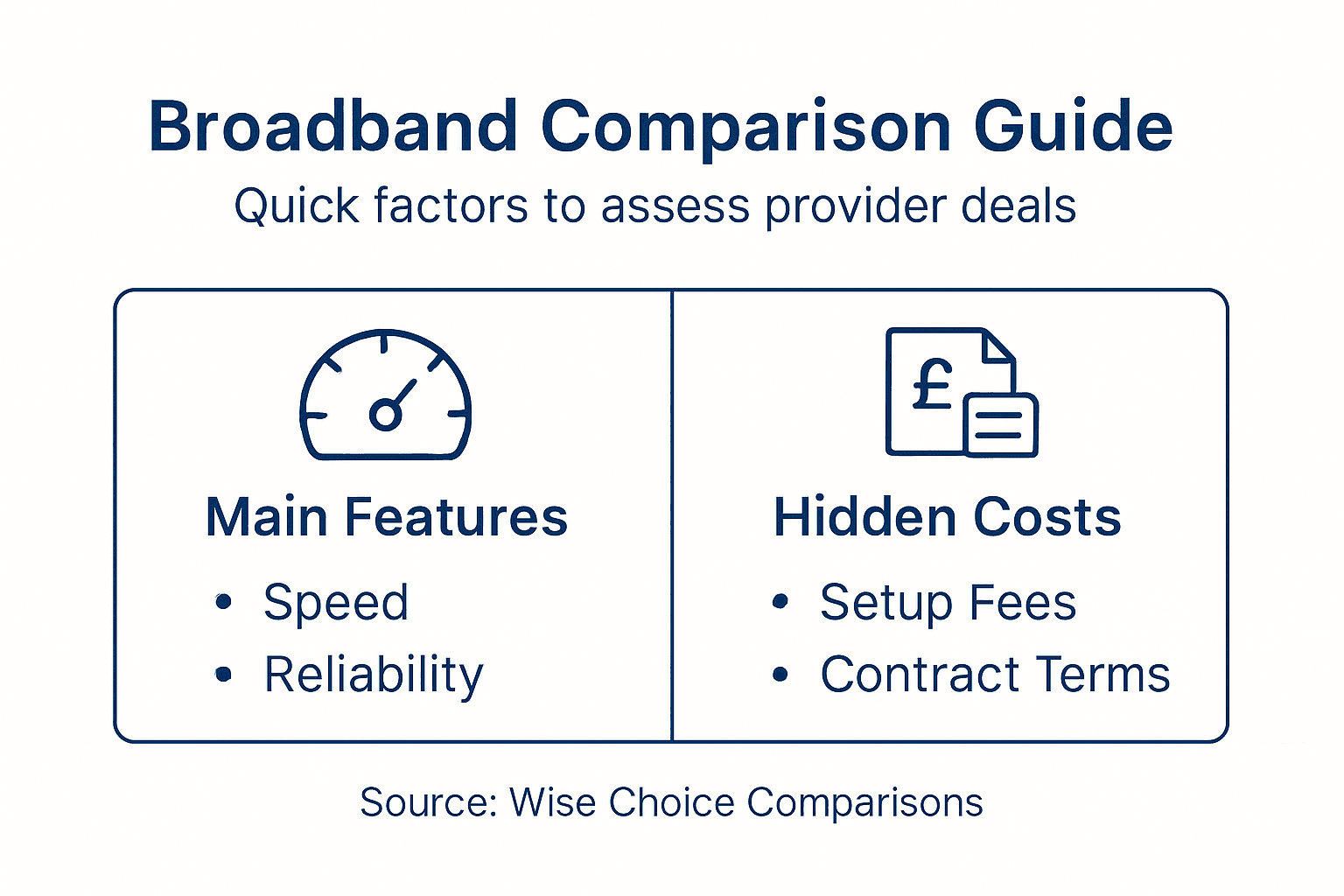
When you compare, you’re essentially asking: “What’s actually available to me, and which option gives me the best value?” This isn’t theoretical—it’s practical research that affects your monthly budget.
Many UK households stick with their original provider simply because they haven’t looked around. The average customer could save between £60 and £200 annually by switching to a better deal. That’s money sitting on the table.
Comparison also reveals disparities. You might discover that your neighbour pays £15 less per month for identical speeds, or that a faster package costs only slightly more than your current deal. These differences matter.
The process involves gathering quotes from multiple providers in your area, comparing their speeds, prices, and contract terms, then selecting the option that fits your budget and usage patterns. That’s where Wise Choice Comparisons helps—consolidating those quotes in one place so you can see all your options at once.
Comparing broadband isn’t a one-time task; prices and offers change regularly, so it’s worth revisiting your options every 12–18 months to ensure you’re still getting fair value.
Pro tip: Note your current contract’s end date before you compare—switching mid-contract often incurs early exit fees, so timing your comparison strategically can save you extra costs.
Different Types Of Broadband Services
Not all broadband is created equal. The technology delivering internet to your home dramatically affects speed, reliability, and price. Understanding your options helps you pick the service that actually works for your household.
Broadband services vary by technology, each with distinct strengths and limitations. Here’s what’s available in the UK market:
Fibre to the Premises (FTTP)
This is the fastest option. Optical fibre cables run directly into your home, delivering speeds of 150 Mbps to 1 Gbps. You’ll pay more, but if you stream 4K video, work from home, or have a large household, FTTP eliminates buffering and lag. Availability remains limited outside cities, though the UK Government’s broadband rollout is expanding fibre coverage.
Cable Internet
Cable uses hybrid fibre and coaxial cables already installed in many UK areas. Speeds typically range from 50 Mbps to 500 Mbps. It’s reliable, widely available in urban and suburban areas, and moderately priced. The downside: speeds can slow during peak hours when many neighbours are online simultaneously.
Digital Subscriber Line (DSL)
DSL transmits data through existing telephone lines. Speeds are slower—usually 10 to 65 Mbps—making it suitable for basic browsing and email but frustrating for streaming or gaming. DSL reaches more rural areas than fibre because it uses existing infrastructure. It’s the most affordable option.
Fixed Wireless
A wireless transmitter sends internet to a receiver installed on your property. Speeds range from 30 to 100 Mbps. This works well in areas where laying cables is expensive or impractical. Weather can affect signal strength occasionally.
Satellite
Satellite provides coverage to remote areas where other technologies don’t reach. Speeds are lower (around 20 to 50 Mbps) and latency (delay) is noticeable, making gaming difficult. Cost is higher due to installation fees.
To better understand broadband technology options and their impact, see the comparison below:
| Technology | Speed Range | Best For | Key Limitation |
|---|---|---|---|
| Fibre to the Premises | 150 Mbps – 1 Gbps | Large households, heavy use | Limited rural coverage |
| Cable | 50 – 500 Mbps | Streaming, families | Slower at peak times |
| Digital Subscriber Line | 10 – 65 Mbps | Basic use, rural access | Low speed, outdated lines |
| Fixed Wireless | 30 – 100 Mbps | Homes without good cabling | Weather affects reliability |
| Satellite | 20 – 50 Mbps | Remote or rural locations | High cost, higher latency |
Key comparison points:
- Fibre offers maximum speed but limited availability
- Cable balances speed and affordability across most urban areas
- DSL reaches more postcodes but sacrifices speed
- Fixed wireless suits areas where infrastructure is sparse
- Satellite reaches anywhere but carries performance trade-offs
Speed and price are fundamental factors distinguishing broadband services, directly influencing usability for tasks like video streaming, gaming, and large downloads.
Pro tip: Check your postcode on Wise Choice Comparisons to see which technologies are actually available to you—availability trumps everything else, so knowing your options first prevents disappointment when comparing plans.
Key Factors For Effective Comparison
Not all broadband deals are equal, and comparing prices alone will lead you astray. Effective comparison requires examining multiple technical and financial factors that directly impact your actual experience.
Speed and Performance
Download and upload speeds matter most. Download speed determines how quickly you retrieve content; upload speed affects video calls and file sharing. Latency—the delay before data transmission starts—matters for gaming and real-time applications. Check what speeds each provider actually guarantees in your area, not just their advertised maximums.
Data Caps and Fair Use Policies
Some providers impose monthly data limits, throttling your speed once you exceed them. Others offer “unlimited” but define fair use differently. If you stream regularly or work from home, unlimited data without throttling is essential. Read the fine print carefully.
Contract Terms and Fees
A low monthly price means nothing if you’re locked in for 24 months. Check contract length, early termination fees, and setup costs. Some providers offer no-contract plans—pay slightly more monthly but cancel anytime. Understand what you’re actually paying over the full contract period.
True Price, Not Just Monthly Rate
Effective comparison must account for plan speed and true price changes for like-for-like services. Compare the total cost including installation, equipment rental, and any other hidden charges. A £25 monthly plan might cost £40 once you include extras.
Customer Service Quality
When your internet stops working, responsive support matters enormously. Research provider reviews focusing on customer service, not just complaint volume. Check availability—24/7 phone support, live chat, or email only?
Geographic Availability and Reliability
Effective comparison of broadband providers requires considering multiple factors including availability. Your postcode determines which providers reach you and what speeds they deliver. Rural areas have fewer options; urban areas offer more competition. Check historical reliability data for providers in your area—some maintain better uptime than others.
Key comparison checklist:
- Download and upload speeds (guaranteed, not marketed)
- Monthly data allowance and throttling policies
- Total cost including all fees over the full contract
- Contract length and early exit penalties
- Customer service availability and reputation
- Provider reliability in your specific area
Affordability, service reliability, and digital equity are critical to identifying the best provider tailored to your needs and resources.
Pro tip: Gather quotes from multiple providers using comparison tools, then phone two or three directly—they often offer better deals to retain customers, and negotiation can save you £5–£10 monthly before you sign.
Financial And Service Implications Explained
Comparing broadband providers affects two critical areas of your life: your bank account and your ability to work, learn, and connect. Understanding both implications helps you make decisions that deliver real value.
The Financial Picture
Broadband costs directly impact your household budget. Good news: prices for popular broadband services have declined significantly whilst speeds have increased. This means you can often access faster speeds for less money than a few years ago. However, prices vary enormously by location and provider.
Switching providers can save £100–£200 annually. That’s money going back into your pocket instead of paying for service you could replace with something better. The catch: you need to compare total cost, not just the monthly rate.
Hidden Costs Add Up
Monthly price is only part of the equation. Setup fees, equipment rental charges, and contract penalties often inflate the true cost significantly. A plan advertising £20 monthly might actually cost £35 once you include everything. Calculate the total cost over your entire contract period.
Here is a summary of hidden and total costs to consider before choosing a broadband plan:
| Cost Type | Possible Amount | When It’s Charged | Impact on Total Cost |
|---|---|---|---|
| Monthly Fee | £15 – £50 / month | Ongoing, throughout contract | Most visible cost |
| Setup/Installation | £0 – £70 (one-off) | At start of contract | Increases upfront expenditure |
| Equipment Rental | £5 – £10 / month | Monthly, added to bill | Raises monthly commitment |
| Early Termination | Up to full contract | If leaving before contract ends | Can negate switch savings |
Service Implications Are Equally Important
Broadband isn’t just about entertainment. Quality internet now supports remote work, children’s education, and telehealth appointments. Poor broadband means missed video calls, frozen screens during online lessons, and inability to access healthcare services remotely. Reliable, fast broadband has become essential infrastructure.
Different speeds suit different needs. Basic browsing and email? 10 Mbps suffices. Streaming video and working from home? You’ll need 50 Mbps minimum. Multiple simultaneous users? 100 Mbps or faster prevents frustration.
The Affordability–Reliability Trade-off
Price comparisons must control for speed and plan quality to avoid misleading conclusions about true value. The cheapest provider might offer unreliable service. Mid-range options often provide the best balance of cost and performance.
Key financial and service considerations:
- Total contract cost, not monthly price alone
- Speed requirements based on your household usage patterns
- Reliability ratings in your specific area
- Customer support availability when problems occur
- Data allowances and throttling policies
- Flexibility to switch if circumstances change
Balancing cost savings against service reliability and speed needs determines whether you genuinely benefit from switching providers.
Pro tip: Calculate your true annual cost by taking the monthly rate, adding setup fees, equipment rental costs, and dividing the total by months in the contract—this reveals the real price-per-month comparison.
Common Mistakes When Choosing Broadband
Most people make predictable errors when selecting broadband. These mistakes cost money, waste time, and lead to frustration. Knowing what to avoid helps you choose confidently.
Mistake 1: Chasing Speed Without Checking Reliability
Advertised speeds grab attention, but reliability matters more. A provider offering 150 Mbps with constant outages delivers less value than 50 Mbps that works consistently. Research provider reviews focusing on uptime and customer support, not just headline speeds. Speed means nothing if the connection drops regularly.
Mistake 2: Ignoring Hidden Costs
The monthly price you see isn’t what you’ll actually pay. Setup fees, equipment rental, installation charges, and early termination penalties inflate the true cost significantly. Calculate total contract cost before comparing providers. A £20 monthly plan costing £300 total over 18 months beats a £25 plan costing £480.
Mistake 3: Not Understanding Contract Terms
Many customers lock themselves into unfavourable contracts without reading the terms. Check contract length, exit fees, and price-rise clauses. Some providers include automatic price increases; others lock in rates for the full term. Know what you’re signing.
Mistake 4: Overlooking Data Caps and Fair Use Policies
Mistakes often made include focusing solely on speed without considering data caps or additional fees. Unlimited plans sound great until you hit throttling thresholds. If streaming, gaming, or working from home dominates your usage, verify whether data limits apply. Read policies carefully.
Mistake 5: Ignoring Local Availability Challenges
Many consumers fail to consider administrative and regulatory challenges that affect service quality, especially outside cities. Just because a provider operates in your city doesn’t mean they service your postcode. Always check availability in your specific area before comparing plans. Rural postcodes often have genuinely limited options.
Mistake 6: Choosing Based on Promotion Alone
Introductory rates expire. A £15 monthly introductory offer might jump to £35 after 12 months. Providers advertise the attractive rate prominently but bury the renewal price. Ask for the renewal price before committing.
Common mistakes to avoid:
- Comparing speeds without checking reliability ratings
- Overlooking setup fees, rental charges, and exit penalties
- Not reading contract terms and price-increase clauses
- Assuming unlimited plans have no throttling thresholds
- Skipping availability checks for your specific postcode
- Basing decisions on introductory rates only
Relying solely on price or promotional speeds without understanding true costs and service quality leads to dissatisfaction and insufficient service.
Pro tip: Request the renewal price explicitly before signing—compare introductory rates alongside post-promotional pricing to understand true long-term affordability.
Discover Better Broadband Deals Today with Wise Choice Comparisons
Choosing the right broadband provider can feel overwhelming with so many options, hidden costs, and contract complexities. This article highlights exactly why comparing broadband providers is essential for securing the best value and service tailored to your needs. If you want to avoid common pitfalls like unexpected fees, unreliable speeds, or restrictive contracts then Wise Choice Comparisons is your trusted partner. Our platform simplifies your search by consolidating real quotes from multiple UK providers so you can see clear, transparent deals based on your postcode and usage requirements.

Take control of your broadband choices now. Visit Wise Choice Comparisons to explore tailored broadband options designed specifically for UK consumers. Start by browsing our Uncategorized Archives – Wise Choice Comparisons for insightful comparisons and tips. Don’t wait for your contract to expire and overpay. Use Wise Choice Comparisons today to find reliable broadband deals that fit your budget and lifestyle.
Frequently Asked Questions
What factors should I consider when comparing broadband providers?
When comparing broadband providers, consider speed (download and upload rates), cost (monthly fees and hidden charges), availability (service in your postcode), contract terms (length and penalties), and customer service quality.
How can I determine the right broadband speed for my household?
Determine the suitable broadband speed by assessing your household’s internet usage. For basic browsing and emails, 10 Mbps is sufficient. For streaming, video calls, or remote work, aim for 50 Mbps or higher, especially if multiple users are online simultaneously.
Are there hidden costs associated with broadband plans?
Yes, hidden costs can include setup fees, equipment rental charges, installation costs, and early termination penalties. Always calculate the total cost over the contract period to get a true understanding of what you’re paying.
How often should I compare broadband deals?
It’s advisable to compare broadband deals every 12 to 18 months, as prices and offers frequently change. This ensures you continue to get the best value for your broadband service.