

Renewing your car insurance can feel routine, but sticking with the same provider each year often means missing out on significant savings. For British drivers, motor insurance is legally required and directly affects your household budget. Regular reviews help you secure the best deals, avoid outdated coverage, and confidently compare options on transparent platforms. Understanding the true value of policy reviews empowers you to spend less while protecting what matters most.
Table of Contents
- Car Insurance Reviews Explained for UK Drivers
- Types of Policies and Review Triggers
- How Reviewing Impacts Costs and Savings
- Common Pitfalls of Not Reviewing Regularly
- Key Steps for Effective Policy Comparison
Key Takeaways
| Point | Details |
|---|---|
| Regular Reviews Save Money | Annually reviewing your insurance can save between £150 and £400 compared to inaction. |
| Know Your Coverage Needs | Understand the differences between policy types to ensure adequate protection based on your vehicle age and circumstances. |
| Claims Handling Matters | Assess insurers’ reputations for claims handling through reviews to avoid poor service when you need it most. |
| Keep Information Updated | Life changes greatly affect your policy adequacy; prevent gaps by updating details with your insurer promptly. |
Car Insurance Reviews Explained for UK Drivers
Car insurance reviews help you understand what coverage you actually need and whether your current policy offers value for money. Many UK drivers renew without questioning their provider, missing opportunities to save hundreds of pounds annually.
Before diving into reviews, understand that motor insurance is legally required for all vehicles on UK roads. This creates the foundation for why reviews matter: you’re not just comparing prices, you’re ensuring compliance whilst protecting yourself financially.
Understanding the Three Main Policy Types
Insurance companies offer three distinct coverage levels, and reviews help clarify which suits your situation.
- Third party only covers damage or injury you cause to others, but not your own vehicle
- Third party, fire and theft adds protection if your car is stolen or damaged by fire
- Comprehensive covers everything, including your own vehicle damage from accidents, weather, or vandalism
Reviews reveal which level represents genuine value. A 10-year-old car might not warrant comprehensive coverage, whilst a newer vehicle typically justifies the extra cost.
Reading other drivers’ claims experiences helps you understand what each policy type actually covers in real situations, not just what the marketing materials promise.
Why Your Current Quote Might Be Outdated
Insurance companies don’t automatically reward loyalty. Your renewal quote often increases even if nothing has changed, simply because you’re an existing customer.

Reviews of comparison sites and individual insurers reveal this pattern consistently. Drivers who review their options annually typically pay 20-30% less than those who simply accept renewal letters. The market shifts constantly, and new providers regularly offer competitive rates to attract customers.
Using smart comparison strategies when reviewing quotes ensures you capture the best available deals rather than paying inflated renewal prices.
What Reviews Reveal About Claims Handling
Price matters, but so does reliability when you actually need your insurer. Online reviews show how quickly providers respond to claims, whether settlements are fair, and how helpful their customer service proves during stressful situations.
Look for patterns in reviews rather than isolated complaints. One negative review about a specific agent differs significantly from consistent complaints about slow processing across multiple reviews.
Making Your Decision
Effective reviews focus on three elements:
- Compare coverage levels across policies (not just price)
- Check claims handling reputation from independent reviewers
- Verify any exclusions that might affect your specific situation
Many drivers discover during reviews that they’re paying for coverage they don’t need, or conversely, missing protection that matters for their circumstances.
Pro tip: Set a calendar reminder to review your insurance annually, ideally four weeks before renewal, giving you time to research and switch providers without rushing into decisions that cost you money.
Types of Policies and Review Triggers
Understanding different policy types helps you identify which one matches your needs and when to review your coverage. Not all policies suit every driver, and your circumstances change over time.
Policy Types at a Glance
UK insurers offer several distinct policies beyond the basic three coverage levels. Each serves different purposes and attracts different drivers.
- Annual policies provide coverage for 12 months and represent the standard option most drivers choose
- Multi-year policies lock in rates across multiple years, offering price stability but less flexibility
- Pay-as-you-go insurance charges based on actual miles driven, suiting low-mileage drivers
- Named driver policies cover specific individuals, whilst fleet policies suit business vehicles
- Classic car policies cater to vintage vehicles with specialist valuation and repair options
Your choice depends on driving patterns, vehicle age, and how often you expect your circumstances to change.
Here’s a consolidated summary of the main types of car insurance policies for UK drivers and their best-match scenarios:
| Policy Type | Typical Driver Profile | Renewal Flexibility | Key Financial Benefit |
|---|---|---|---|
| Annual policy | Most everyday drivers | High; can switch yearly | Access to latest discounts |
| Multi-year policy | Long-term planners | Low; locked for 2-3 years | Stable premium for duration |
| Pay-as-you-go insurance | Low-mileage, occasional users | Very High; monthly review | Only pay for miles driven |
| Named driver policy | Households with multiple cars | Moderate; add/remove as needed | Tailored cover for family |
| Classic car policy | Vintage car enthusiasts | Moderate; specialist review | Specialist repairs, valuation |
What Triggers a Policy Review
Life events and changing situations create natural moments to reassess your coverage. Demographic, economic, and social factors all influence whether your current policy remains appropriate.
Key review triggers include:
- Reaching a birthday (age-based discounts often apply)
- Completing advanced driving courses (qualification discounts available)
- Changing jobs or moving house (affects premiums significantly)
- Adding or removing drivers from your policy
- Getting married or entering a civil partnership
- Purchasing a different vehicle
- Significant changes to annual mileage
Life changes don’t automatically update your insurer’s understanding of your situation, so you must proactively review and update your policy details to access relevant discounts.
Market Changes and Policy Performance
Beyond personal circumstances, market innovations and competitor offerings shift regularly. New insurers entering the market often provide competitive rates unavailable months earlier.
If your current provider hasn’t rewarded loyalty, reviewing alternatives typically reveals better-priced options. Older policies sometimes include outdated features whilst missing modern coverage options available today.
Financial Literacy and Purchase Decisions
Your comfort with insurance concepts influences how thoroughly you review options. Risk perception and financial literacy shape whether you prioritise lowest price or comprehensive coverage evaluation.
Drivers with higher financial literacy typically review more regularly and understand coverage nuances better, leading to more appropriate policy selections overall.
Pro tip: Create a checklist of your current coverage details, then use it when reviewing new quotes so you compare identical protection levels rather than just chasing the lowest premium.
How Reviewing Impacts Costs and Savings
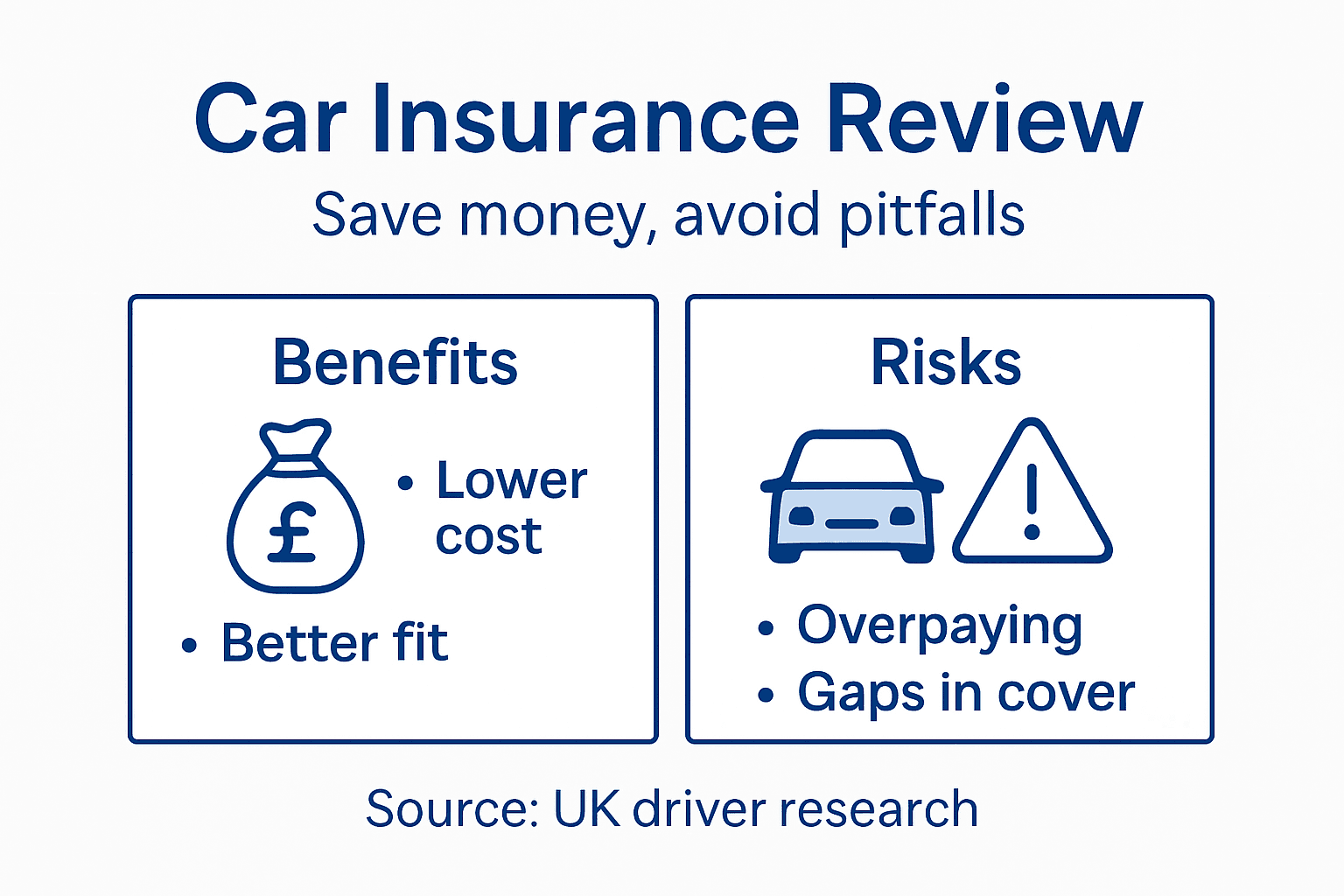
Regularly reviewing your car insurance directly affects what you pay and whether you’re adequately protected. Many drivers underestimate the financial impact of inaction, missing significant savings opportunities each year.
The Rising Cost Problem
Insurance premiums climb consistently across the UK market. Rising costs and claims inflation push premiums higher globally, meaning your renewal quote often increases regardless of your driving record or claims history.
Without reviewing alternatives, you absorb these increases automatically. A policy costing £600 five years ago might now cost £900 with the same provider, yet competitors might offer identical coverage for £650.
Identifying Hidden Savings
Reviews reveal multiple ways to reduce your premium without sacrificing protection. Your circumstances change constantly, creating new discount opportunities you might not realise.
Common savings available through reviews include:
- Adjusting your excess (higher excess means lower premiums)
- Removing unnecessary add-ons you no longer need
- Accessing discounts for recent qualifications or courses
- Bundling policies if you also have home insurance
- Benefitting from improved driving records over time
Reviewing policies ensures coverage aligns with current circumstances whilst eliminating overpayment for features you don’t use or underinsurance in areas you do.
Avoiding Overpayment and Underinsurance
Reviews tackle two opposite problems simultaneously. Some drivers pay for extensive coverage they’ll never claim, wasting money monthly.
Others cut costs too aggressively, leaving dangerous gaps in protection. Finding the balance requires honest assessment of your actual needs versus worst-case scenarios.
Comparison platforms show this balance clearly, displaying what different excess levels and coverage options cost, allowing informed decisions rather than guessing.
The Real Numbers
UK drivers who review annually typically save between £150 and £400 per year compared to those who never switch. Over a five-year period, that’s £750 to £2,000 kept in your pocket.
These savings come from switching providers, adjusting coverage levels, or simply forcing your current insurer to match competitive quotes to keep your business.
To help visualise the financial impact of reviewing car insurance annually, consult this quick reference table:
| Review Frequency | Typical Annual Savings | Five-Year Savings Estimate | Competitive Provider Access |
|---|---|---|---|
| Never review | £0 | £0 | Limited, mostly old provider |
| Review every 2 yrs | £75–£200 | £375–£1,000 | Moderate; some better options |
| Annual review | £150–£400 | £750–£2,000 | Highest; fresh deals yearly |
Pro tip: Request a breakdown of available discounts from any insurer you’re considering; many don’t automatically apply these, meaning you could qualify for savings worth £50 to £150 simply by asking specifically about each discount category.
Common Pitfalls of Not Reviewing Regularly
Skipping insurance reviews creates serious financial and legal consequences. Many drivers don’t realise the risks until they actually need their coverage and discover costly gaps.
Outdated Policy Information
Life changes quickly, but outdated policies don’t reflect your current situation. Not reviewing regularly risks holding outdated policies that no longer match your actual circumstances and protection needs.
If you’ve moved house, changed jobs, or added household members but haven’t updated your insurer, your policy might be invalid. Insurers can refuse claims if your details were inaccurate when you took out the cover.
Missing Out on Crucial Discounts
You might qualify for discounts you don’t even know exist. Advanced driving qualifications, improved safety features, or completing telematics programmes all unlock savings.
Without reviewing, you simply don’t access these reductions. Over three years, missing available discounts could cost you £300 to £600 that should have stayed in your account.
Exposure to Financial Loss
Inadequate coverage leaves you personally liable for costs your insurance won’t cover. A single accident could expose you to five-figure repair bills if your coverage is insufficient.
Conversely, paying for extensive cover you don’t need wastes money monthly. The balance matters, and reviews ensure you’re protected without overpaying.
Policy Drift and Coverage Gaps
Your needs evolve as circumstances change. Life changes like moving, adding drivers, or buying new cars necessitate updates to your policy to avoid exposure to loss.
Common coverage gaps occur when:
- You use your car for business but have personal-only cover
- You add a young driver without adjusting the policy
- Your vehicle value changes but cover limits don’t
- You change commute patterns but don’t update mileage information
Insurers aren’t obligated to remind you of policy changes or expired discounts; you must actively review to maintain appropriate protection.
Renewal Inflation Trap
Providers deliberately raise renewal quotes, counting on customer inertia to accept increases. Drivers who never switch pay substantially more over time for identical coverage.
The Avoidable Mistake
The costliest pitfall is assuming your current provider offers competitive rates. One annual review takes 20 minutes and typically reveals £100 to £300 in annual savings.
Pro tip: Set a phone reminder for four weeks before your renewal date to begin reviewing options; this timeframe gives you plenty of time to compare quotes and switch providers before your current cover expires.
Key Steps for Effective Policy Comparison
Comparing policies effectively requires a structured approach. Rushing through quotes or missing key details costs you money and leaves you vulnerable to poor coverage decisions.
Gather Your Current Policy Details
Before comparing, document exactly what your current policy covers. Write down your excess amount, coverage limits, and any add-ons you’re paying for.
Knowing these details prevents accidental downgrade or comparing apples with oranges. A quote that appears cheaper might actually offer lower limits or higher excess.
Use Comparison Platforms Systematically
Comparison websites are your fastest route to finding competitive quotes. These platforms consolidate multiple providers, saving hours of individual checking.
However, using them effectively matters. Avoiding common mistakes when using comparison sites helps you capture better deals and avoid expensive errors during the comparison process.
Compare Identical Coverage Levels
This step determines whether you’re actually saving money or just finding a cheaper policy with less protection.
When reviewing quotes, ensure you’re comparing:
- Same excess amount across all quotes
- Identical coverage limits for liability and damage
- Matching add-ons or optional extras
- Same voluntary excess if you’ve set one
Comparing different coverage levels reveals false savings—a £400 policy with lower limits isn’t better value than a £500 policy that properly protects you.
Check Additional Details
Price isn’t everything. Read reviews about claims handling, customer service responsiveness, and whether the insurer actually honours its commitments.
A policy that’s £100 cheaper but takes months to settle claims costs you far more in stress and time.
Apply for Your Chosen Policy
When you’ve found your best option, apply immediately. Quotes expire, and premium prices can change daily as market conditions shift.
Answer all questions honestly. Incorrect information gives insurers grounds to refuse claims later, making the whole process worthless.
Review Your New Policy Documents
Once approved, read your documents thoroughly. Verify that your coverage, excess, and details match what you quoted for and expected.
If anything looks wrong, contact your insurer immediately to correct it before your cover starts.
Pro tip: Compare at least three quotes with identical coverage levels before deciding, and check online reviews about each insurer’s claims process since price alone doesn’t reveal whether you’ll be satisfied when you actually need support.
Take Control of Your Car Insurance Costs Today
Understanding why reviewing your car insurance regularly is crucial can save you from overpayment and inadequate coverage. This article highlights the risks of accepting automatic renewal quotes and missing out on valuable discounts or protection that fits your current needs. At Wise Choice Comparisons, we make it simple for UK drivers to explore a wide range of insurance options in one place, helping you avoid the renewal inflation trap and coverage gaps that so many face.

Ready to secure better deals and ensure your car insurance truly works for you? Use our impartial, easy-to-navigate platform to compare multiple providers and uncover savings tailored to your situation. Don’t wait until your renewal date is too close. Start your review now at Wise Choice Comparisons, browse helpful insights in our Uncategorized category, and empower yourself to manage household expenses effectively while finding the best policy for your needs.
Frequently Asked Questions
What are the main types of car insurance policies I should consider reviewing?
The three main types of car insurance policies are: 1) Third party only, which covers damage or injury you cause to others; 2) Third party, fire and theft, which adds protection for your own car if it is stolen or damaged by fire; 3) Comprehensive coverage, which protects both your vehicle and the third party in all situations.
How often should I review my car insurance policy?
It is advisable to review your car insurance policy at least once a year, ideally four weeks before your renewal date. This allows you to compare quotes and ensure you get the best deal.
What factors should I consider when comparing car insurance quotes?
When comparing car insurance quotes, focus on comparing identical coverage levels, including the same excess amount, coverage limits, matching add-ons, and reviews of the insurer’s claims handling and customer service.
What benefits can I expect from regularly reviewing my car insurance?
Regularly reviewing your car insurance can lead to significant savings, as UK drivers who review their options typically save between £150 and £400 per year. It also ensures your coverage remains appropriate for your current circumstances, helping avoid underinsurance and unnecessary costs.
Recommended
- 10 Smart Tips for Comparing Insurance Quotes in the UK – Wise Choice Comparisons
- 10 Smart Tips for Comparing Insurance Quotes in the UK – Wise Choice Comparisons
- How to Save Hundreds Every Year Using Comparison Websites in the UK – Wise Choice Comparisons
- How to Save Hundreds Every Year Using Comparison Websites in the UK – Wise Choice Comparisons
- How to Compare Life Insurance Policies for the Best Value
- Why Review Your Mortgage in 2025 – Auckland Insights