

Choosing car insurance can feel complicated, especially when you’re tackling it for the first time. With British roads growing busier and costs rising, making informed decisions matters more than ever for your budget and peace of mind. This guide offers clear steps for evaluating your needs, preparing key documents and using trusted comparison sites, putting you in control of finding affordable car insurance that matches your lifestyle and financial goals.
Table of Contents
- Step 1: Assess Your Insurance Needs
- Step 2: Gather Essential Vehicle And Driver Details
- Step 3: Compare Trusted Car Insurance Quotes Online
- Step 4: Check Cover Details And Exclusions Carefully
- Step 5: Finalise And Secure The Chosen Policy
Quick Summary
| Important Insight | Explanation |
|---|---|
| 1. Assess your unique insurance needs | Evaluate your personal driving profile and circumstances to determine appropriate coverage levels. |
| 2. Gather essential documentation | Collect all necessary vehicle and driver information to streamline the insurance quote process. |
| 3. Compare multiple insurance quotes | Use reputable comparison sites to review various policies, focusing on coverage details, not just price. |
| 4. Review policy exclusions carefully | Understand what is not covered by your chosen policy to avoid unexpected complications during claims. |
| 5. Finalise payment options wisely | Choose between annual lump sum or monthly payments, considering the potential financial implications of each. |
Step 1: Assess your insurance needs
Understanding and assessing your car insurance requirements is crucial for securing appropriate protection without overpaying. This step involves carefully evaluating your personal circumstances, driving profile, and potential risks to determine the right level of coverage for your specific situation.
To assess your insurance needs effectively, consider these key factors:
- Driving history and previous claims
- Type and value of your vehicle
- Annual mileage and typical driving conditions
- Personal financial situation and risk tolerance
- Legal minimum coverage requirements in your region
Your insurance needs will vary significantly depending on personal circumstances. Comprehensive insurance assessment requires examining multiple dimensions beyond basic legal requirements. Younger drivers or those with performance vehicles might need more extensive coverage, while experienced drivers with older cars could opt for more minimal protection.
To clarify how coverage types address different risks, see the comparison below:
| Coverage Type | Main Focus | Typical Scenarios Covered | Impact on Premium |
|---|---|---|---|
| Third-Party Only | Liability for others | Damage to other vehicles, property | Lowest |
| Third-Party, Fire & Theft | Basic plus incident | Adds cover for fire and theft | Moderate |
| Comprehensive | Full personal cover | Accidents, weather, theft, vandalism | Highest |
Understanding your specific risk profile helps you select the most cost-effective insurance strategy.
Start by calculating your potential financial exposure. This means considering not just mandatory insurance, but potential out-of-pocket expenses in case of an accident, theft, or vehicle damage. Consider factors like your car’s replacement value, your ability to cover unexpected repair costs, and your overall financial resilience.

Expert tip: Request quotes from multiple insurers and compare comprehensive coverage options to find the most suitable protection for your specific circumstances.
Step 2: Gather essential vehicle and driver details
In this crucial step, you’ll collect all the necessary information that insurers require to accurately assess and price your car insurance policy. Preparing these details in advance will streamline the quote process and help you secure the most appropriate coverage.
Prepare the following key documents and information:
- Vehicle registration document (V5C)
- Driver’s licence details
- Vehicle identification data
- Current MOT certificate
- Proof of no-claims bonus
- Vehicle modification records
- Personal address and occupation information
- Annual mileage estimate
Each piece of documentation plays a critical role in determining your insurance risk profile. Insurers use these details to calculate precise premium rates based on your specific vehicle characteristics and personal driving history.
Accurate and complete documentation is the foundation of securing the right car insurance policy.
Your vehicle details are particularly important. Modern insurers employ sophisticated risk assessment algorithms that analyse everything from your car’s make and model to its safety features and historical repair records. Comprehensive vehicle risk data helps insurers understand potential claim probabilities and adjust pricing accordingly.
Expert tip: Gather all required documents before requesting quotes to expedite the insurance application process and ensure maximum accuracy.
Step 3: Compare trusted car insurance quotes online
In this critical step, you’ll navigate the world of online car insurance comparisons to find the most suitable and cost-effective policy for your specific needs. Online comparison platforms have revolutionised how UK drivers secure their vehicle insurance, offering unprecedented transparency and ease of access.
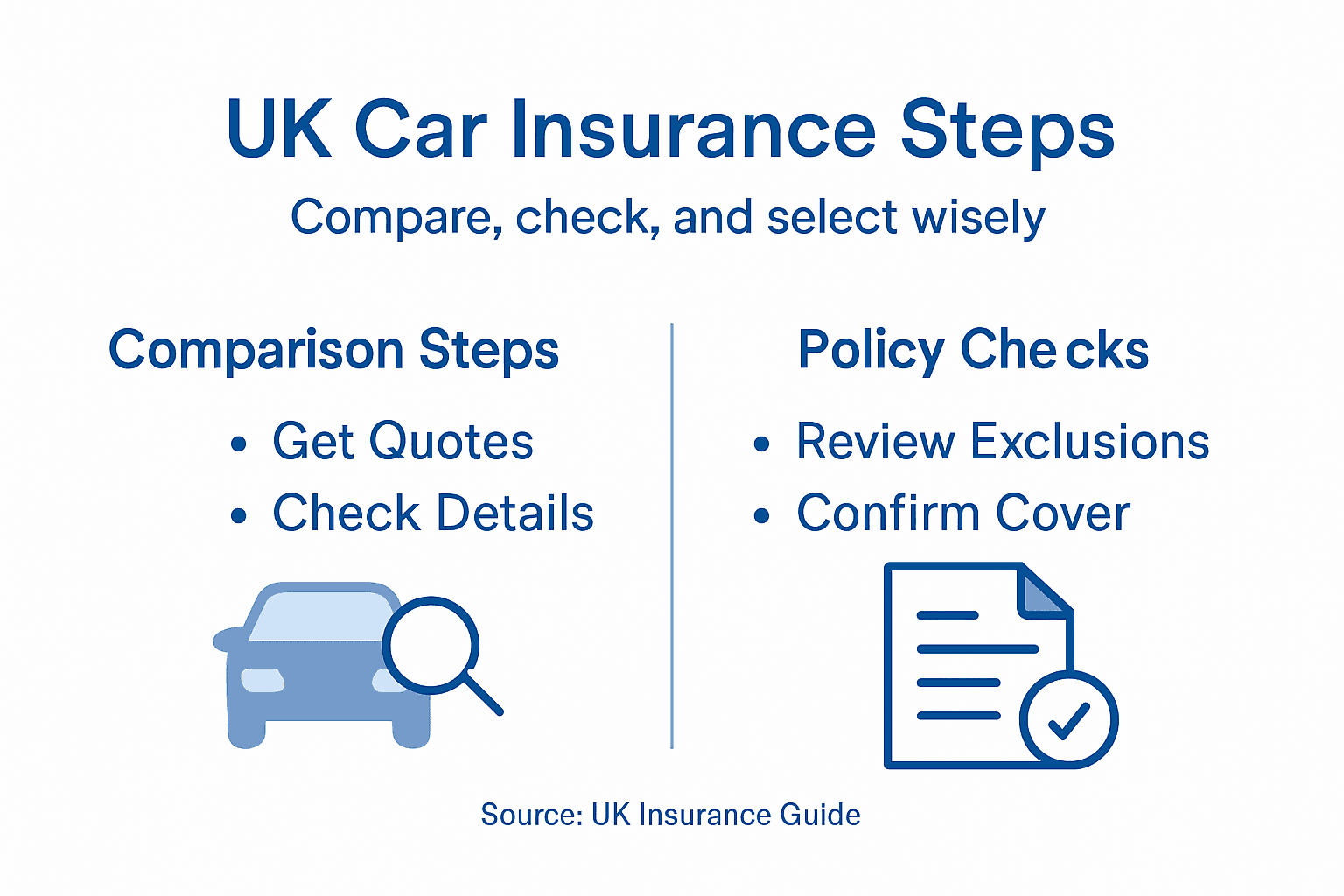
Follow these essential steps to compare quotes effectively:
- Use reputable comparison websites
- Input all gathered vehicle and driver details accurately
- Compare coverage levels, not just prices
- Check policy excess and exclusions
- Review additional benefits and optional extras
- Verify insurer’s financial stability and customer ratings
Price comparison platforms have simplified the complex process of finding the right car insurance. These digital tools allow you to view multiple quotes side by side, enabling quick and informed decision-making without the traditional hassle of contacting individual insurers.
Comparing quotes isn’t just about finding the cheapest option, but identifying the most comprehensive protection for your specific circumstances.
When comparing quotes, pay close attention to the details beyond the headline price. Look for differences in coverage limits, policy inclusions, and optional extras that might provide additional value. Some policies might offer roadside assistance, courtesy cars, or enhanced legal protection that could prove invaluable in specific scenarios.
Expert tip: Always run comparisons across multiple platforms to ensure you’re capturing the broadest range of available insurance options.
Step 4: Check cover details and exclusions carefully
Carefully reviewing your car insurance policy’s details and exclusions is crucial to ensuring you have the right protection for your specific driving circumstances. Understanding the fine print can save you from unexpected financial surprises and potential coverage gaps.
Key areas to scrutinise in your insurance policy include:
- Comprehensive coverage limits
- Specific policy exclusions
- Geographical coverage restrictions
- Conditions for claiming
- Additional driver provisions
- Scenarios not covered by standard protection
Vehicle insurance terms can vary significantly between providers, making a thorough review essential. Different insurers have unique approaches to defining coverage, which means what seems like a minor detail could have major implications during a potential claim.
Not all insurance policies are created equal – the devil is truly in the details.
Pay particular attention to specific exclusions that might prevent you from making a claim. These could include driving outside permitted areas, using your vehicle for business when only personal use is covered, or incidents occurring during specific circumstances like track days or international travel.
Expert tip: Ask your insurance provider to clearly explain any clause or term you do not completely understand, and request written clarification if needed.
Step 5: Finalise and secure the chosen policy
With your ideal car insurance policy identified, it’s time to complete the purchase and secure your protection. This final step involves carefully reviewing and confirming all policy details to ensure you’re fully covered and understand your new insurance agreement.
Key actions to complete your insurance purchase:
- Verify all personal and vehicle details
- Confirm coverage start date
- Select payment method
- Review payment schedule
- Obtain official policy documentation
- Save digital and physical copies of insurance certificate
Consumer insurance purchasing strategies recommend thoroughly checking every detail before finalising your policy. Small oversights during this stage could potentially impact your future claims or coverage.
Your insurance policy is a legal contract – precision matters more than speed.
Understand your payment options, which typically include annual lump sum payments or monthly instalments. Monthly payments might seem more manageable, but often incur additional interest charges. Some insurers offer discounts for annual payments, which could save you money in the long run.
Here’s a quick summary of typical payment options for car insurance policies:
| Payment Method | Key Characteristics | Financial Implications | Best For |
|---|---|---|---|
| Annual Lump Sum | One payment per year | May offer discounts, no interest | Cost-conscious drivers |
| Monthly Instalments | Spread over 12 months | Possible added interest charges | Budget management |
Expert tip: Request a complete policy summary and keep it accessible, ensuring you can quickly reference your coverage details if needed.
Take Control of Your Car Insurance Choices with Confidence
Navigating the complex steps of car insurance selection can be overwhelming with so many details to consider from coverage types to policy exclusions. This article highlights your pain points such as assessing your insurance needs, gathering precise vehicle details, and comparing quotes effectively to avoid costly mistakes. Wise Choice Comparisons offers a straightforward solution to these challenges by providing a free and impartial platform tailored for UK drivers ready to find the best possible car insurance deals.

Discover an easier way to evaluate multiple insurance quotes side by side with insights based on your personal profile. Whether you are looking for comprehensive protection or want clarity on policy terms, our site empowers you to make informed choices without confusion or hidden surprises. Act now to save money and secure peace of mind by visiting Wise Choice Comparisons. Explore practical resources and get started on your personalised comparison through our Uncategorized category for insurance and more. The smartest step toward smart saving is just a click away.
Frequently Asked Questions
How do I assess my car insurance needs?
Understanding your car insurance needs involves evaluating factors like your driving history, the type and value of your vehicle, and your financial situation. Start by considering your potential financial exposure in case of accidents or theft and calculate the minimum coverage required based on local regulations.
What essential information do I need for a car insurance quote?
To obtain a car insurance quote, gather documents such as your vehicle registration, driver’s licence details, and proof of no-claims bonus. Ensure you also have information about your vehicle’s mileage and any modifications made, as this will help insurers assess your risk more accurately.
How should I compare car insurance quotes?
When comparing car insurance quotes, use reputable comparison websites and input all your gathered details accurately. Focus on comparing coverage levels and policy exclusions alongside prices to identify the best value for your specific needs.
What should I look for in my car insurance policy details?
Carefully review your car insurance policy for coverage limits, exclusions, and geographical restrictions. Pay special attention to any specific exclusions that could impact your ability to file a claim under certain circumstances.
What steps should I take to finalise my car insurance purchase?
To finalise your car insurance purchase, verify all personal and vehicle details, confirm the coverage start date, and choose your payment method. Ensure you receive official documentation and understand your payment schedule to avoid any future issues with your policy.
How can I ensure my car insurance policy is appropriate for me?
To ensure your car insurance policy is suitable, regularly assess your personal circumstances and driving habits, and compare existing coverage with your current needs. Adjust your policy based on changes in your vehicle, annual mileage, or driving conditions to maintain optimal protection.