

Searching for affordable car insurance often feels like a balancing act between legal requirements and your personal budget. For British drivers, vehicle insurance is a legal necessity, but finding the right cover means more than just meeting the minimum. If you value transparent comparisons and want to keep your household costs down, this guide shows how to identify the best car insurance options and confidently protect your finances. Discover how to make informed choices that suit your needs.
Table of Contents
- Step 1: Assess Your Personal Insurance Requirements
- Step 2: Compare Quotes From Trusted UK Providers
- Step 3: Evaluate Policy Features And Exclusions
- Step 4: Verify Provider Credentials And Reviews
- Step 5: Select And Secure Your Chosen Car Insurance
Quick Summary
| Key Insight | Explanation |
|---|---|
| 1. Assess your insurance needs | Understand your unique driving frequency and vehicle value to choose the best coverage. |
| 2. Compare multiple quotes | Research various providers to find comprehensive coverage at competitive rates without rushing. |
| 3. Evaluate policy features | Pay attention to important additions like windscreen cover and courtesy car benefits in your policy. |
| 4. Verify provider reputation | Check regulatory compliance and customer reviews to ensure the insurer’s reliability and performance. |
| 5. Finalise and secure your policy | Review all terms thoroughly before signing to ensure you understand your coverage and commitments. |
Step 1: Assess your personal insurance requirements
Understanding your car insurance needs is more than just meeting legal requirements – it’s about protecting yourself financially and getting the right coverage for your specific situation. Vehicle insurance is a legal requirement in the United Kingdom, but the type and extent of coverage can vary dramatically based on your personal circumstances.
To effectively assess your insurance requirements, start by considering several key factors:
- Driving frequency: How often do you use your vehicle?
- Vehicle value: What is the current market value of your car?
- Personal risk profile: Do you have a history of accidents or driving violations?
- Financial protection needs: What level of financial risk are you comfortable assuming?
Consider your options carefully. While basic third-party insurance covers damage to others, it might not protect your own vehicle. Understanding coverage types is crucial in making an informed decision. You’ll want to balance legal compliance with personal financial protection.

Your insurance needs will likely fall into three primary categories:
Quickly distinguish the main car insurance types in the UK:
| Insurance Type | Primary Protection | Typical Use Case |
|---|---|---|
| Third-Party Only | Covers damage to others | Budget or older vehicles |
| Third-Party, Fire & Theft | Adds fire and theft cover | Moderate-value vehicles |
| Comprehensive | Includes own vehicle cover | New or high-value vehicles |
- Third-Party Only: The legal minimum coverage
- Third-Party, Fire and Theft: Additional protection against specific risks
- Comprehensive Coverage: The most extensive protection for your vehicle
Your ideal insurance plan should match your personal risk tolerance and financial situation.
Expert tip: Consider getting quotes from multiple insurers and carefully compare the details of each policy, not just the price.
Step 2: Compare quotes from trusted UK providers
Comparing car insurance quotes is a critical step in finding the right coverage at the best possible price. With numerous insurers operating in the United Kingdom, you’ll want to approach this process strategically to ensure you’re getting comprehensive protection without overpaying.
To effectively compare insurance quotes, follow these essential steps:
- Research multiple providers: Don’t settle for the first quote you receive
- Understand coverage details: Look beyond the headline price
- Check policy exclusions: Know exactly what is and isn’t covered
- Consider voluntary excess: Higher excess can lower your premium
When comparing quotes, pay close attention to the following key factors:
- Base premium cost
- Comprehensive coverage scope
- Additional benefits and add-ons
- Customer service reputation
- Claims handling process
The cheapest quote is not always the best value for your specific needs.
Most insurance comparison websites will allow you to input your details once and receive multiple quotes simultaneously. This saves time and provides a comprehensive view of available options across different providers.
Expert tip: Always read the fine print and consider speaking directly with insurance representatives to clarify any uncertainties in the policy details.
Step 3: Evaluate policy features and exclusions
Understanding the intricacies of your car insurance policy goes far beyond simply comparing prices. Essential policy features can make a significant difference in your overall protection and financial security.
When evaluating policy features, pay close attention to these critical components:
- Windscreen repair coverage: Understand the extent of glass damage protection
- Personal belongings protection: Check limits and conditions for items in your vehicle
- Key replacement costs: Verify how much support you receive if keys are lost or stolen
- No-claims discount protection: Assess how your premium might change after a claim
Most comprehensive policies include additional benefits that can provide substantial value:
Here’s how common extra features impact your car insurance:
| Feature | Financial Impact | Daily Benefit |
|---|---|---|
| Windscreen Cover | Reduces repair expense | Faster glass repairs |
| Courtesy Car | Prevents lost mobility | Keeps you on the road |
| Breakdown Assistance | Lowers towing cost | Prompt roadside help |
- Car rescue cover
- Courtesy car provision
- Legal expense coverage
- Breakdown assistance
- Accident recovery services
Not all insurance features are created equal – read the fine print carefully.
Critical exclusions can leave you financially vulnerable, so meticulously review what scenarios are NOT covered by your policy. This might include driving outside permitted areas, using your vehicle for business purposes, or specific types of damage.
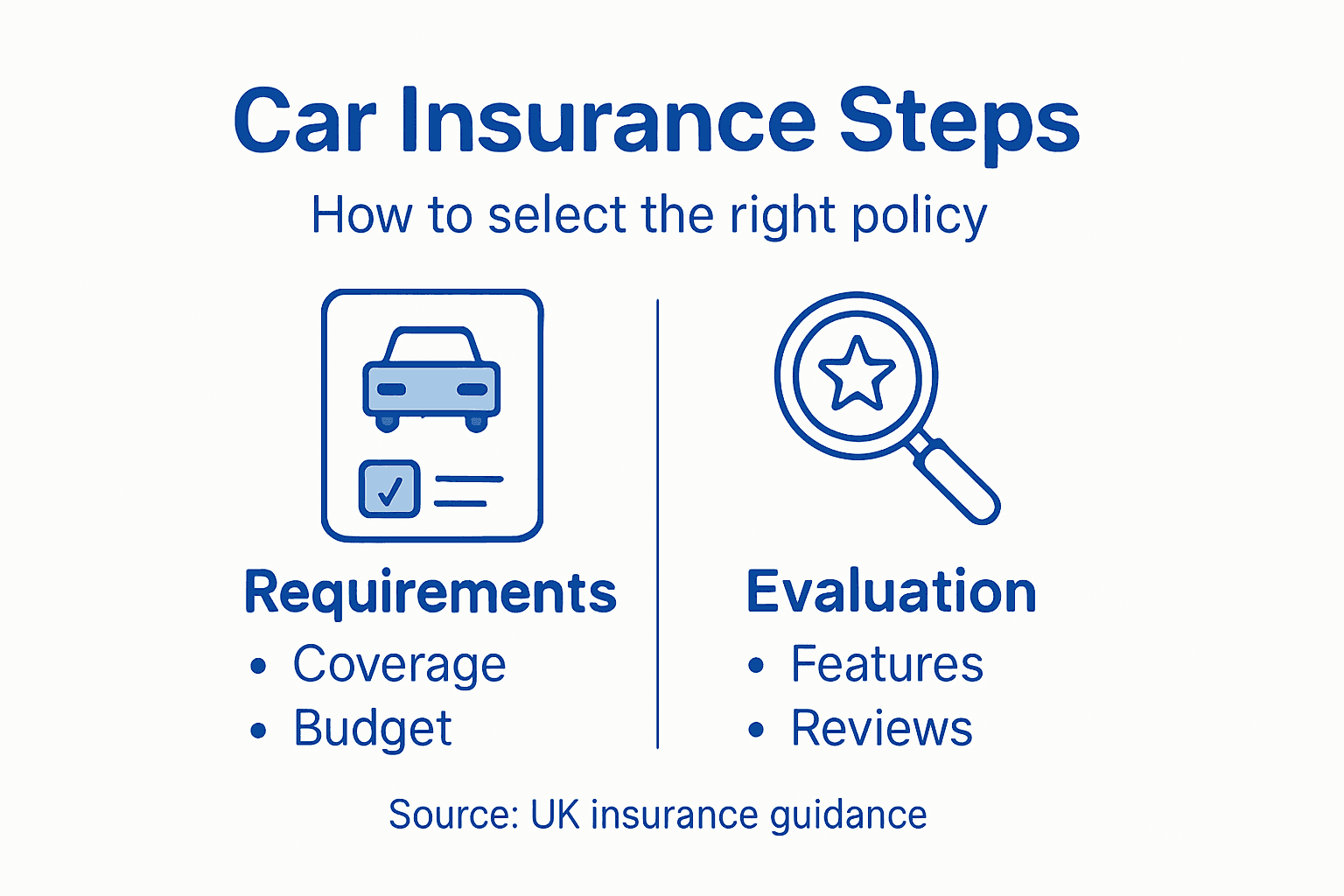
Expert tip: Create a comparison spreadsheet to track different policies’ features, making it easier to identify the most comprehensive coverage for your specific needs.
Step 4: Verify provider credentials and reviews
Validating the legitimacy and reputation of car insurance providers is crucial in protecting yourself from potential financial risks. Official Motor Insurance Database checks can help ensure you’re dealing with a credible and regulated insurance company.
When verifying provider credentials, focus on these critical aspects:
- Regulatory compliance: Check Financial Conduct Authority (FCA) registration
- Financial stability: Review independent financial strength ratings
- Customer service reputation: Examine independent review platforms
- Claims handling track record: Research historical performance and customer experiences
Key sources for thorough verification include:
- Financial Conduct Authority register
- Independent financial rating agencies
- Consumer review websites
- Industry ombudsman reports
- Professional insurance associations
Not all online reviews tell the complete story – look for consistent patterns rather than isolated experiences.
Beyond official credentials, pay attention to nuanced indicators of reliability such as years in business, specialisation in car insurance, and transparency of policy terms.
Expert tip: Cross-reference reviews from multiple platforms to get a balanced understanding of the insurance provider’s actual performance and customer satisfaction.
Step 5: Select and secure your chosen car insurance
Finalising your car insurance is the moment where careful research transforms into concrete financial protection. Selecting the right car insurance policy requires a methodical approach to ensure you’re fully covered.
When securing your chosen insurance, follow these crucial steps:
- Review policy documents: Carefully read all terms and conditions
- Confirm coverage details: Verify exact protection parameters
- Check payment options: Understand premium payment schedules
- Arrange immediate activation: Ensure coverage starts when you need it
The final selection process involves several critical actions:
- Double-check personal information accuracy
- Confirm exact policy start date
- Arrange payment method
- Request policy documentation
- Obtain insurance certificate
Your signed policy is a legal contract – read every word carefully before committing.
Remember that your chosen policy should provide comprehensive protection tailored to your specific driving needs, balancing affordability with robust coverage.
Expert tip: Always request a policy summary and keep digital and physical copies in separate, secure locations for quick access during emergencies.
Secure the Best Car Insurance Deal for Your Needs Today
Choosing the right car insurance in the United Kingdom can feel overwhelming with so many options and complex policy details to consider. This article highlights common challenges like balancing coverage types, understanding policy exclusions, and verifying provider credentials to protect yourself financially while meeting legal requirements. If you want to avoid costly mistakes and feel confident about your selection, it is essential to compare trustworthy providers and evaluate comprehensive features tailored to your unique driving profile.

Take control of your car insurance journey with Wise Choice Comparisons, your trusted UK-based platform offering free and impartial quotes that simplify the selection process. Our user-friendly portal consolidates options from regulated insurers so you can quickly compare prices, coverage scopes, and policy benefits without hidden surprises. Start today by exploring our Uncategorized – Wise Choice Comparisons category, designed to help you navigate essential services effortlessly. Don’t wait for uncertainty to cost you more. Visit Wise Choice Comparisons now and make your next car insurance decision with confidence and clarity.
Frequently Asked Questions
How do I assess my personal car insurance requirements?
To assess your personal car insurance requirements, consider factors like how often you drive, the value of your vehicle, and your personal risk profile. Start by evaluating your comfort level with financial risks and the type of coverage that aligns with your needs, such as third-party or comprehensive insurance.
What should I look for when comparing car insurance quotes?
When comparing car insurance quotes, focus on the base premium cost, coverage scope, and additional benefits or add-ons. Gather quotes from multiple providers to ensure you are getting a comprehensive view, and review policy exclusions to avoid unexpected gaps in coverage.
What are the essential policy features I should evaluate?
Key policy features to evaluate include windscreean repair coverage, personal belongings protection, and no-claims discount protection. Examine these elements carefully, as they can significantly impact both your financial protection and the value of your coverage.
How can I verify the credentials of a car insurance provider?
To verify the credentials of a car insurance provider, check for regulatory compliance with the necessary financial authorities and assess their financial stability through independent ratings. Research customer reviews and claims handling records to ensure they have a solid reputation for service and reliability.
What steps should I take to secure my chosen car insurance policy?
To secure your chosen car insurance policy, carefully review all terms and conditions, confirm coverage details, and check payment options. Make sure to arrange for immediate activation so that your coverage is in place when you need it.